![[CGM #5] White Bread 197 vs Multigrain Bread 159](/ko/cgm-day4-grain-bread-experiment/cover_hu_d85488a8dfc3c9cb.webp)
TL;DR
- On Day 1, I had white bread toast with cream cheese. Blood sugar peaked at 197. Still at 143 after 2 hours.
- On Day 4, I switched to multigrain bread with a fried egg. Peak: 159. After 2 hours: 96.
- I just swapped the bread and added an egg — and the gap was 38.
This is a personal log, not medical advice. Talk to a medical professional about diagnosis or treatment.
On weekend mornings, I have coffee and toast. An Americano with a couple of slices — that’s the routine.
But on Day 1, I had white bread toast and it spiked to 197. Lower than porridge (202) or rice noodles (211), sure, but white bread was no joke either.
So I ran a small experiment. Same toast setup — just swap the bread. How much of a difference would it make?
Table of contents
The Test Subject: E-Mart Traders 10-Grain Bread
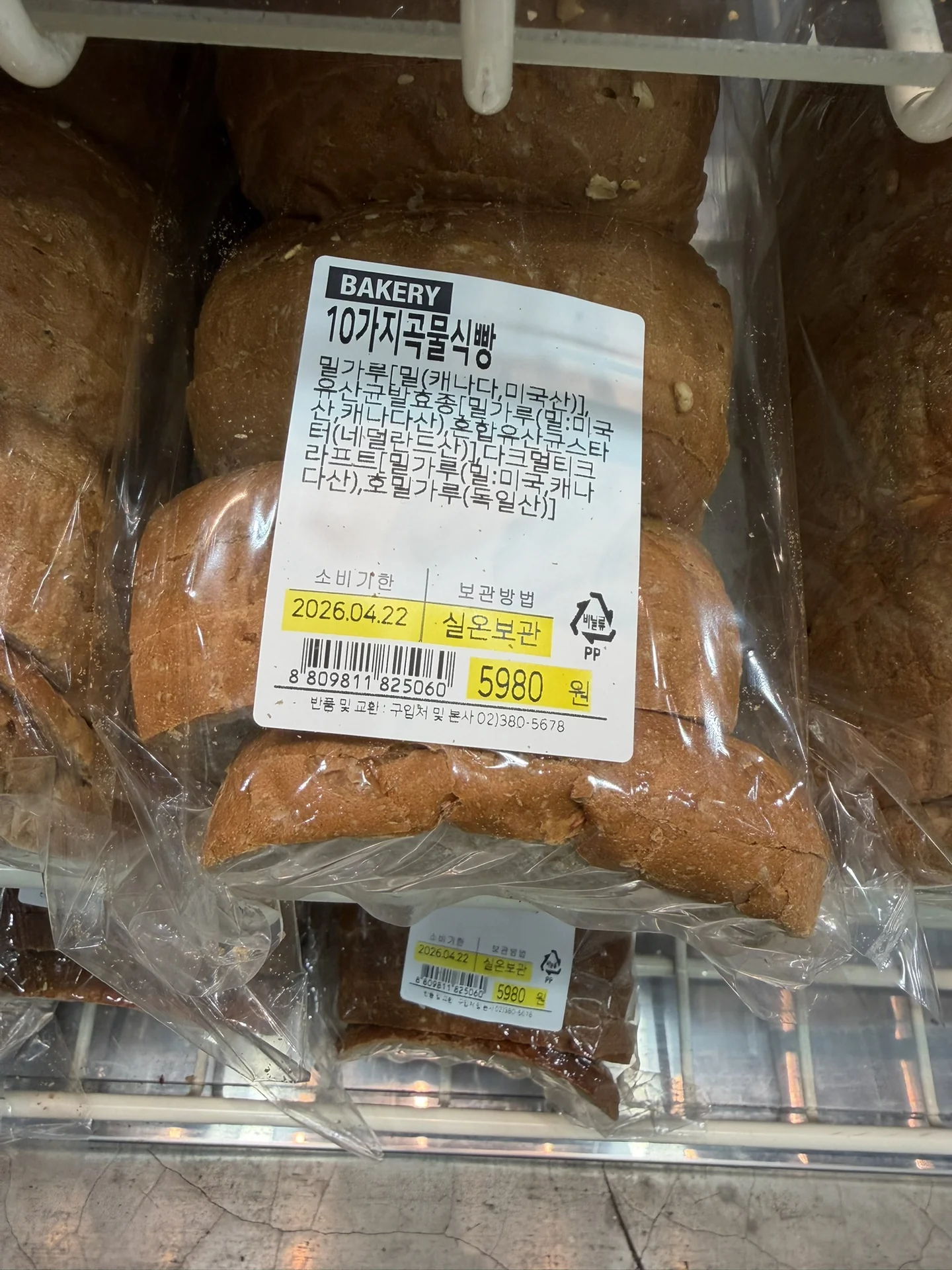 10-Grain Bread. Wheat flour, sourdough starter, mixed probiotic starter, dark multi-craft flour, rye flour. 5,980 KRW.
I picked up a loaf of 10-grain bread from E-Mart Traders. The name alone sounds healthy. And in theory, higher grain content means more fiber, which slows down blood sugar spikes. The GI (Glycemic Index — a 0–100 scale that measures how fast a food raises your blood sugar) for white bread sits around 70–80, while multigrain bread is roughly 50–60.
But here’s the thing: many store-bought “multigrain” breads have the word “grain” on the label while refined wheat flour is still the main ingredient. This bread is no exception — wheat flour tops the ingredient list. It’s not true whole grain. But would it still be better than white bread?
Time to find out by the numbers.
Round 1: White Bread Toast + Cream Cheese (Day 1)
 A regular afternoon. Americano + white bread toast + cream cheese.
April 16, 2:44 PM. Two slices of white bread, toasted, topped with cream cheese. With an Americano.
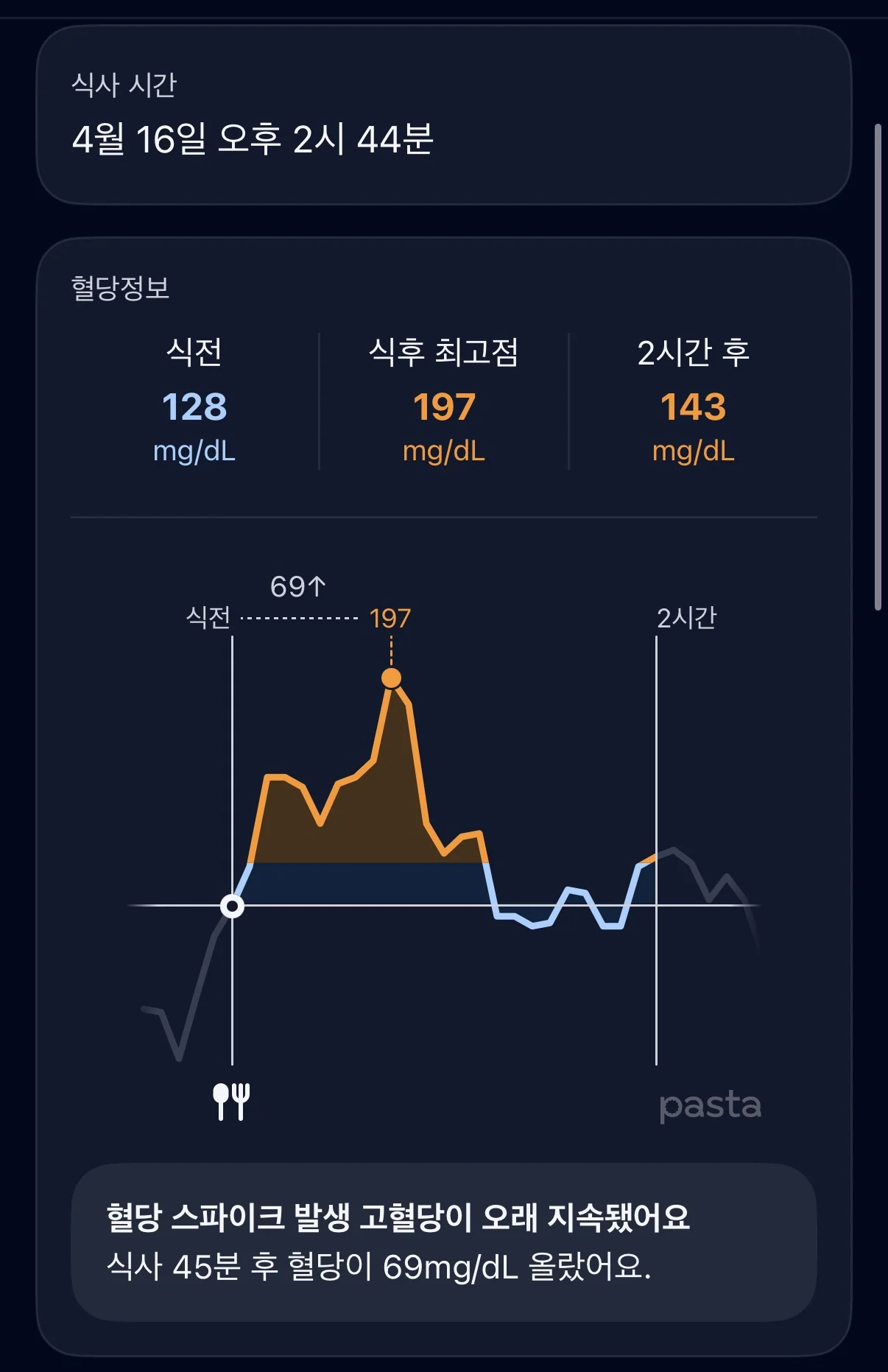 Pre-meal 128 → Peak 197 → 2h after 143. “Blood sugar spike detected. Elevated glucose persisted. Blood sugar rose 69 mg/dL 45 minutes after meal.”
Pre-meal 128. Peak 197. After 2 hours: 143.
A 69-point jump. Nearly hit 200, and after 2 hours it was still at 143 — barely dropping below the normal range threshold (140). The app even warned: “Elevated glucose persisted.”
I didn’t expect plain white bread to do this. It’s not even sweet. Just… flour, I guess.
Round 2: Multigrain Bread Toast + Fried Egg (Day 4)
 Same routine, different bread. Multigrain toast + fried egg + Americano.
April 19, 8:25 AM. This time I switched to multigrain bread. Instead of cream cheese, I added a fried egg. I wanted to try adding some protein while I was at it, and honestly, I just felt like having an egg.
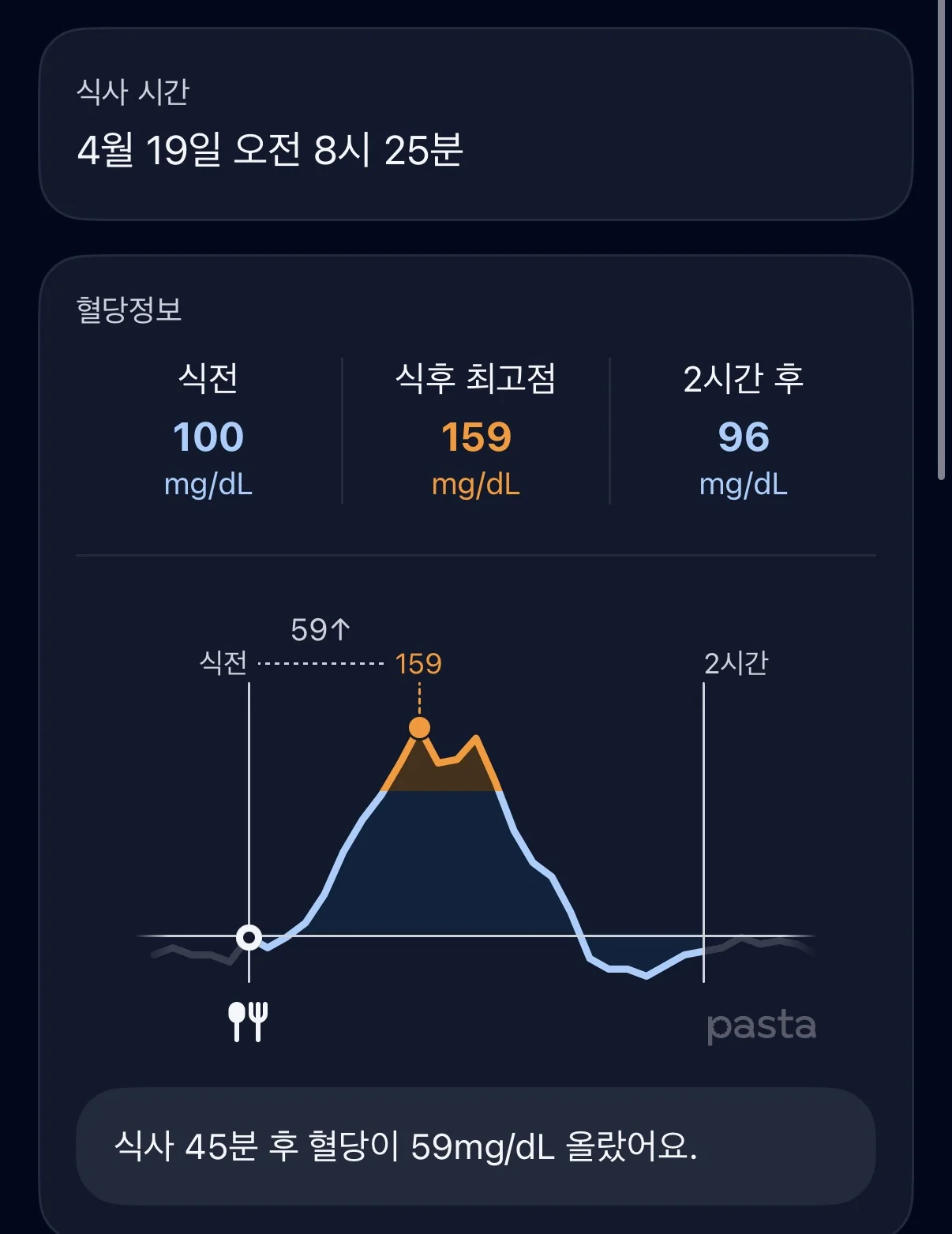 Pre-meal 100 → Peak 159 → 2h after 96. “Blood sugar rose 59 mg/dL 45 minutes after meal.”
Pre-meal 100. Peak 159. After 2 hours: 96.
A 59-point jump. 159 is still above the normal range (140), but it’s noticeably lower than 197. And after 2 hours — 96. Actually lower than before eating. A clean drop.
Side by Side
| White Bread + Cream Cheese | Multigrain Bread + Fried Egg | |
|---|---|---|
| Pre-meal | 128 mg/dL | 100 mg/dL |
| Peak | 197 mg/dL | 159 mg/dL |
| After 2h | 143 mg/dL | 96 mg/dL |
| Rise | +69 mg/dL | +59 mg/dL |
| Recovery | Still above normal after 2h | Below pre-meal after 2h |
Peak difference: 38. Rise difference: 10. The numbers look somewhat similar, but the real gap is in the recovery.
White bread was still at 143 after 2 hours — hovering right at the edge of normal range. Multigrain bread dropped to 96 in the same window. Below where it started.
The graph shapes tell the story too. The white bread curve went up and lingered high. The multigrain curve went up and came back down cleanly — a sharp, nearly symmetrical peak.
Honestly, I Don’t Know What Caused It
The results favor multigrain bread. But claiming “it was the bread” would be hasty. Too many variables changed at once.
It wasn’t just the bread.
- Bread type: White bread → Multigrain bread (GI 70–80 → 50–60)
- Topping: Cream cheese (mostly fat) → Fried egg (protein + fat)
- Time of day: 2:44 PM → 8:25 AM
- Pre-meal glucose: 128 → 100 (different starting lines)
It could have been the bread. The egg might have helped. Being morning might have made a difference. Even the higher pre-meal glucose of 128 could have been a residual effect from an earlier meal.
With this many variables, I can’t say “this was the decisive factor.” What I know is: in my body, with this combination, this is what happened. That’s it.
What I did notice, though: switching from white bread to multigrain and from cream cheese to an egg wasn’t hard at all. The routine barely changed, but the numbers did. Whatever the exact cause, it seemed like a reasonable trade.
[!TIP] A lower GI bread doesn’t guarantee lower blood sugar. Toppings, meal timing, pre-meal glucose, and daily condition all play a role. Also, many “multigrain” breads in stores have refined wheat flour as their primary ingredient — always check the label.
4 Days of Cumulative Data
| Day | Meal | Pre-meal | Peak | After 2h | Rise |
|---|---|---|---|---|---|
| Day 1 | Porridge | - | 202 | - | - |
| Day 1 | White bread + cream cheese | 128 | 197 | 143 | +69 |
| Day 2 Lunch | Rice noodles | 87 | 211 | 166 | +125 |
| Day 2 Dinner | Steak + rice | 96 | 137 | 96 | +41 |
| Day 3 Breakfast | Kimbap | 109 | 176 | 90 | +67 |
| Day 3 Lunch | Buffet (no carbs) | 106 | 154 | 106 | +48 |
| Day 4 Breakfast | Multigrain bread + egg | 100 | 159 | 96 | +59 |
After 4 days, a rough outline is starting to appear.
Everything that went above 200 — porridge, rice noodles, white bread — was dominated by refined carbs. When conditions changed (bread type, exercise, eating order, etc.), the numbers tended to shift. But there isn’t enough data yet to pinpoint a single decisive factor.
Today was no different. White bread → multigrain, cream cheese → fried egg. The routine barely changed, but the numbers did. I can’t pinpoint the cause, but the result wasn’t bad.
Tomorrow morning, it’s multigrain again. Maybe I’ll put two eggs on it.