![[CGM #2] Blood Sugar 211 After a Bowl of Pho](/ko/cgm-day2-rice-noodle-spike/cover_hu_daef15637a927d18.webp)
TL;DR
- Continuous Glucose Monitor (CGM) Day 2. Had beef pho for lunch.
- Pre-meal 87 → peaked at 211. Higher than yesterday’s porridge.
- Still 166 after 2 hours. The spike is one thing, but the fact that it won’t come down is scarier.
This is a personal log, not medical advice. Talk to a medical professional about diagnosis or treatment.
Continuous Glucose Monitor (CGM), Day 2.
Yesterday, a bowl of porridge after my health checkup sent my blood sugar to 202. Porridge. Not greasy, not sweet — the kind of bland food you eat when you’re sick. And yet it blew past 200.
After a day to think it over, I came up with my own explanation. Yesterday, I’d been fasting since dinner the night before for the health checkup. That’s over 12 hours with no food. When carbs suddenly hit an empty stomach after that long, it makes sense for blood sugar to spike. If fasting was the cause, eating normally should be fine.
So this morning I had an Americano, and decided to eat a regular lunch.
Table of contents
Lunch: Beef Pho
I went to a Vietnamese restaurant nearby. Beef pho. Hot broth, generous slices of beef on top. A menu I eat all the time.
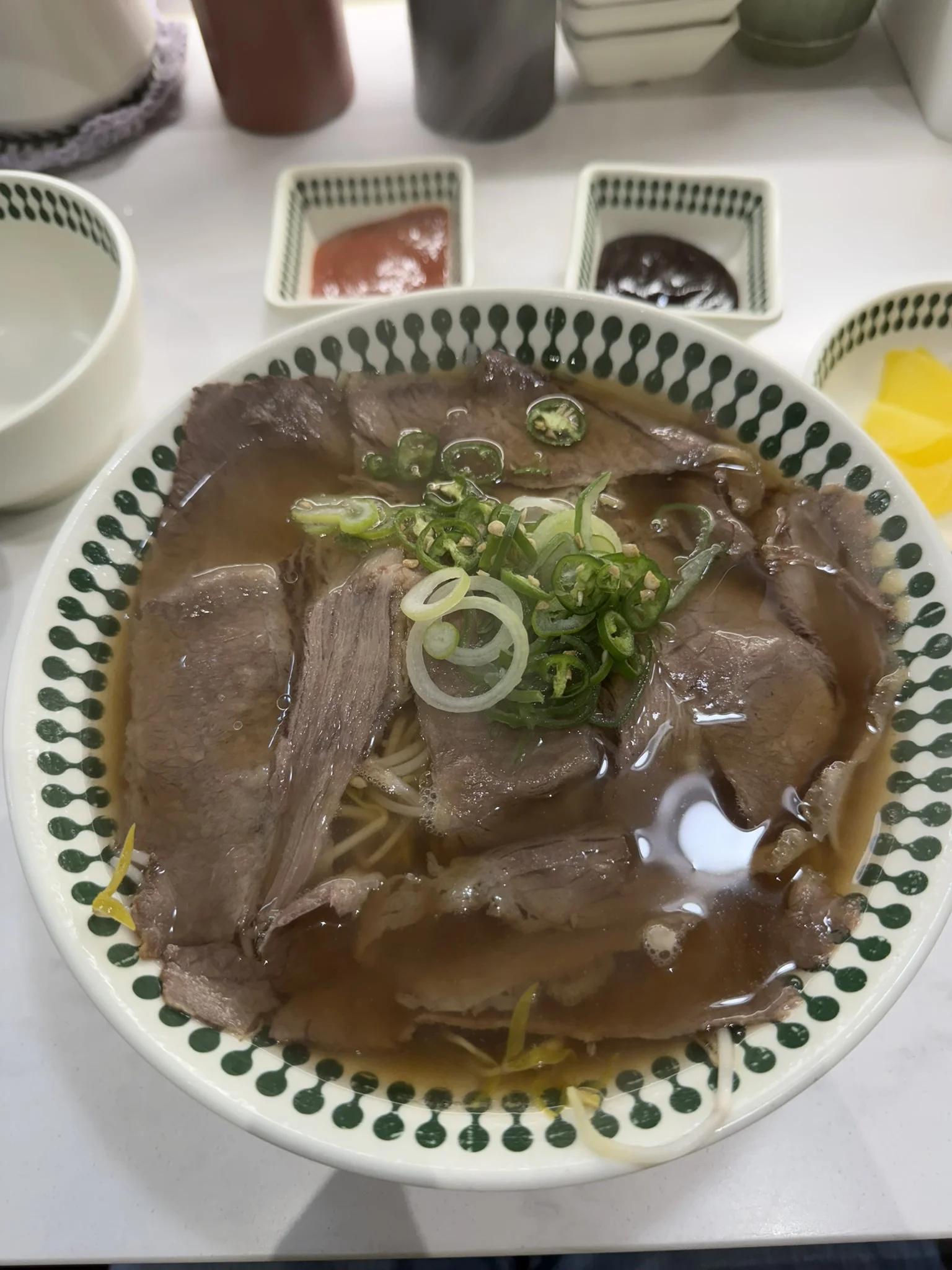 I thought this would be a peaceful lunch. I’d had the same thought yesterday, too.
Rice noodles should be better than wheat noodles, right? I thought it was a light meal.
Finished the bowl casually, went back to work. Without much thought, obviously.
Again?
A while later, I opened the app.
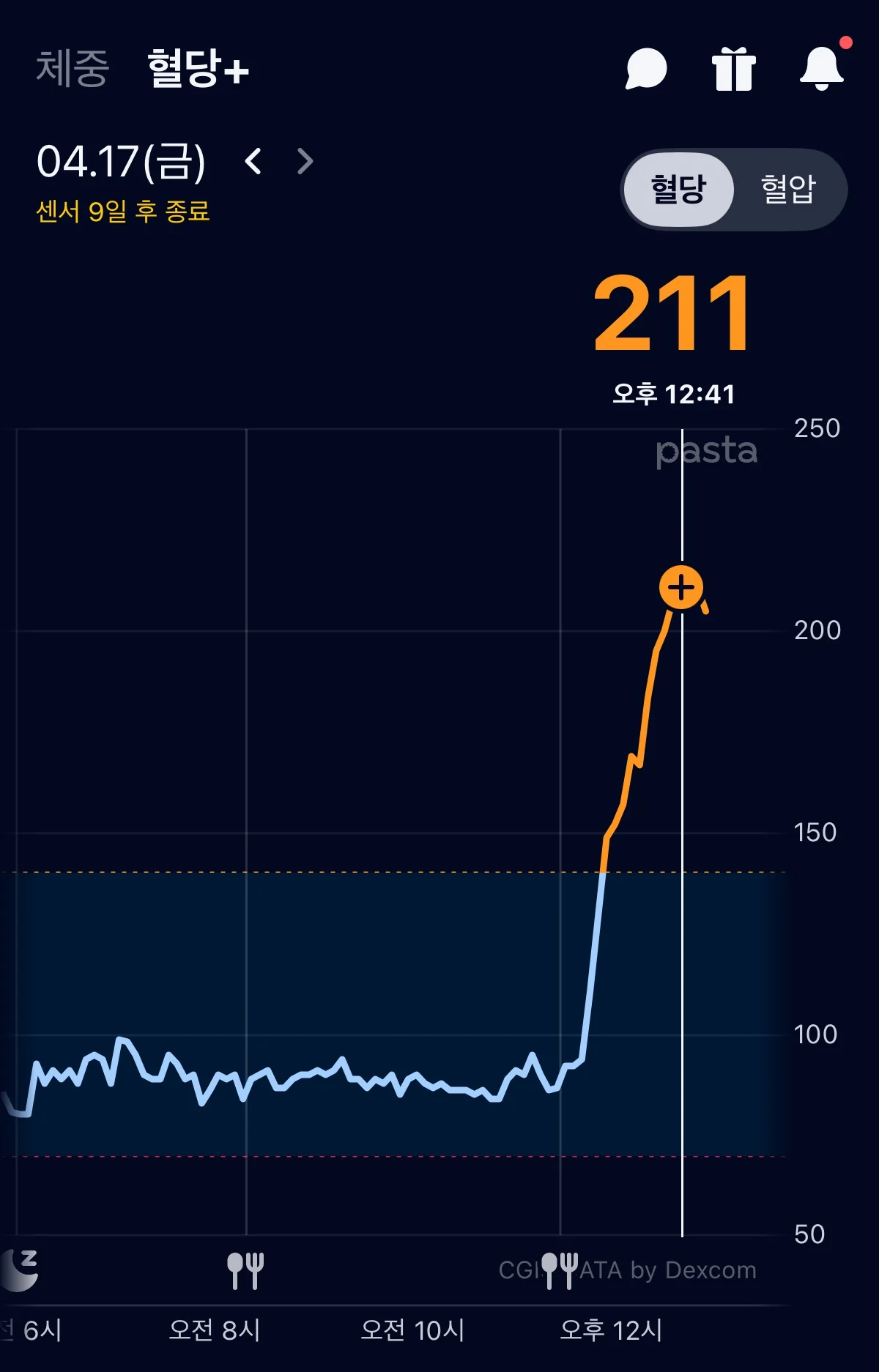 211. Higher than yesterday.
Yesterday I hit 202 after porridge and thought, “This is bad.” Today I beat that number.
My first reaction: “Again?”
The second reaction was different. “Pho does this?” It’s not sweet, not salty — just noodles in broth. And it’s not even wheat — it’s rice noodles.
I looked it up later, and the rice noodles were likely the culprit. Pho noodles are apparently made from refined rice flour, with a GI index around 60. Hot broth makes absorption even faster, or so they say. I thought it was a light meal, but from a blood sugar perspective, it seems like it was a direct hit.
The Really Scary Part Came After
The spike was surprising, but what really got me was something else.
It wouldn’t come down.
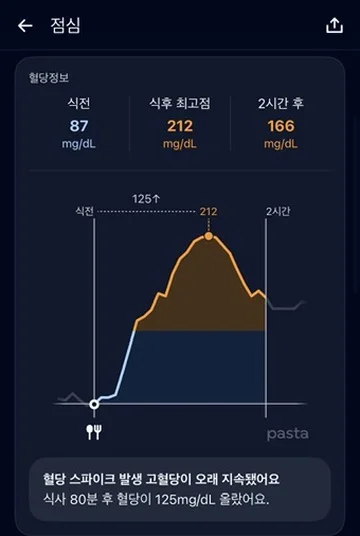 PASTA app meal analysis: “Blood sugar spike detected. High blood sugar persisted for a prolonged period.”
Pre-meal blood sugar: 87. Perfectly normal. Post-meal peak: 212. A jump of 125 mg/dL. Two hours later: 166. Still high.
Generally, blood sugar two hours after a meal should return to under 140 to be considered normal. I was at 166 after two full hours. The app even sent a warning: “High blood sugar persisted for a prolonged period.”
If yesterday’s shock was about how high it went, today’s shock was about how long it stayed there. A blood sugar that spikes and drops quickly feels very different from one that spikes and just… stays.
[!TIP] Pho noodles are made from refined rice flour, meaning low fiber and fast digestion. Hot broth makes absorption even quicker. If you’re watching your blood sugar, try reducing the noodle portion and eating vegetables and protein first — even that small change can make a difference.
5 Days of Eating, 5 Days of Managing
After hitting 200+ two days in a row, a pattern started to emerge.
Fasting → Carbs = Blood sugar explosion.
But it’s only been two days. Way too few data points. So I made a plan.
For the next 5 days: eat whatever I want. Just like normal. No deliberate restraint. Rice, noodles, bread — eat the way I always do and collect data on how my blood sugar reacts.
For the remaining 5 days: switch to a blood sugar management diet. Same meals but change the eating order, reduce carb portions, walk after eating. I want to directly compare what actually makes a difference.
That’s the opportunity a 10-day sensor gives you. Instead of just staring at scary numbers, it’s more useful to figure out what changes actually matter.
Today’s lesson… there is none
Day 2. A bowl of pho, blood sugar 211.
Yesterday I hit 202 on porridge and said, “Should I just drink water tomorrow?” Instead of water, I had pho.
Maybe I should really just drink water tomorrow. No wait, I still need to eat.