![[CGM #11] Pork Belly and Half a Bowl of Rice: Peak 146](/ko/cgm-day10-pork-belly-no-rice/cover_hu_87c8ecd6846d73c9.webp)
TL;DR
- Had a hearty meal of grilled pork belly (Samgyeopsal) with lettuce wraps, Ssamjang (spicy dipping sauce), and half a bowl of rice.
- Surprisingly, my blood sugar stayed calm, hovering around 144~146.
- Even with rice and sugary Ssamjang, the meat (fat/protein) and vegetables (fiber) drastically slowed down absorption, creating a perfect defense.
This is a personal log, not medical advice. Talk to a medical professional about diagnosis or treatment.
CGM Day 10. Over the past days, I’ve watched my blood sugar helplessly skyrocket from carbs like rice noodles and white bread.
Today, it’s time to test one of my all-time favorite menus: Samgyeopsal (Korean pork belly).
Table of contents
5:00 PM: Pork Belly, Ssamjang, and Half a Bowl of Rice
I grilled pork belly for an early dinner. Frying kimchi and bean sprouts in the rendered pork fat is a given. I wrapped the meat in lettuce and added a generous dollop of Ssamjang.
Honestly, after being betrayed by Dakgalbi fried rice yesterday, I was a bit scared of carbs. But eating pork belly without any rice at all felt impossible. As a compromise, I decided to have exactly ‘half a bowl’ of rice to go with the meat.
Ssamjang is also surprisingly high in sugar and carbs. With half a bowl of rice and Ssamjang in the mix, I was pretty nervous about how my glucose graph would react.
The Miracle of 146: Power of Fat and Fiber
After the meal, I anxiously checked the glucose graph.
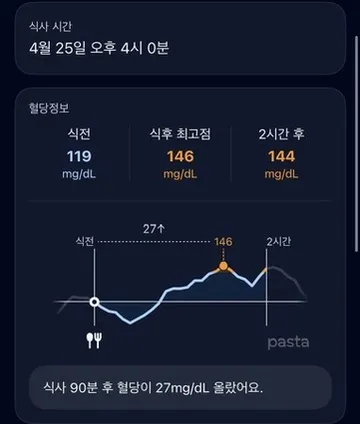 Even with half a bowl of rice and Ssamjang, the graph passed smoothly, maintaining 144~146 without a spike.
The result was astonishing. It stayed calmly between 144 and 146. There was a slight elevation, but absolutely none of the crazy vertical spikes I experienced with bread or rice noodles.
Why didn’t it spike despite the rice and Ssamjang? The reason is clear. The pork belly (fat and protein) and lettuce wraps (fiber) put a heavy brake on the absorption speed.
Fat delays gastric emptying, and protein digests slowly. On top of that, eating plenty of fiber-rich lettuce wraps prevented the carbs (rice) and sugar (Ssamjang) from rushing into my bloodstream all at once. The power of the “Veggies -> Protein -> Carbs” sequence, which I felt during the Dakgalbi meal, proved its worth again.
Had I eaten just plain rice mixed with Ssamjang without the meat or veggies? I guarantee it would have easily broken 190 instead of stopping at 146.
Blindly Starving Isn’t the Answer
Experimenting on my body for 10 days gave me certainty. In blood sugar management, ‘what you eat it with’ is just as important as ‘what you don’t eat’.
Even if you don’t completely cut out rice, pairing it with enough meat and vegetables can excellently defend against glucose spikes. A little bit of Ssamjang won’t ruin everything.
From now on, when I go to a BBQ restaurant, instead of stressing out and skipping rice entirely, I’ll fill up on meat and veggie wraps first, and then happily enjoy just half a bowl of rice. It’s the most realistic and happy diet method I’ve verified with my own body.
[!TIP] High-fat meals like pork belly slow down carb absorption and prevent glucose spikes, but they can cause blood sugar to rise slowly or stay elevated for a longer period after the meal. Also, due to high calories, frequent consumption requires caution for weight management.