![[CGM #10] Dakgalbi Was Fine, Until the Fried Rice](/ko/cgm-day9-dakgalbi-bokkeumbap/cover_hu_85b2fce79f84ca4f.webp)
TL;DR
- Day 9 of wearing the Continuous Glucose Monitor (CGM). With a total lifespan of 10.5 days, I have about one day left. It was surprisingly painless and comfortable.
- I had iron plate Dakgalbi (spicy stir-fried chicken) for lunch. Since Dakgalbi is mainly chicken (protein) and cabbage (veggies), my blood sugar rose slowly and not as high as expected.
- I ate cabbage and chicken first, then ordered fried rice afterwards. My blood sugar was starting to come down, but climbed back up after the fried rice—probably because of it.
This is a personal log, not medical advice. Talk to a medical professional about diagnosis or treatment.
It’s already been 9 days since I attached the Continuous Glucose Monitor (CGM). With a total lifespan of 10.5 days, I have roughly one day left.
I was honestly scared when I first inserted the needle. But once it was on, it turned out to be surprisingly painless. It doesn’t fall off in the shower, and I barely feel it in daily life. The only thing I had to be mindful of was not rolling onto the sensor while sleeping. After 9 days of wearing it, what struck me most is that this tiny device taught me more about my eating habits than any other source of information ever could.
Table of contents
12:10 PM: Iron Plate Dakgalbi
Today’s lunch was my favorite: Iron Plate Dakgalbi.
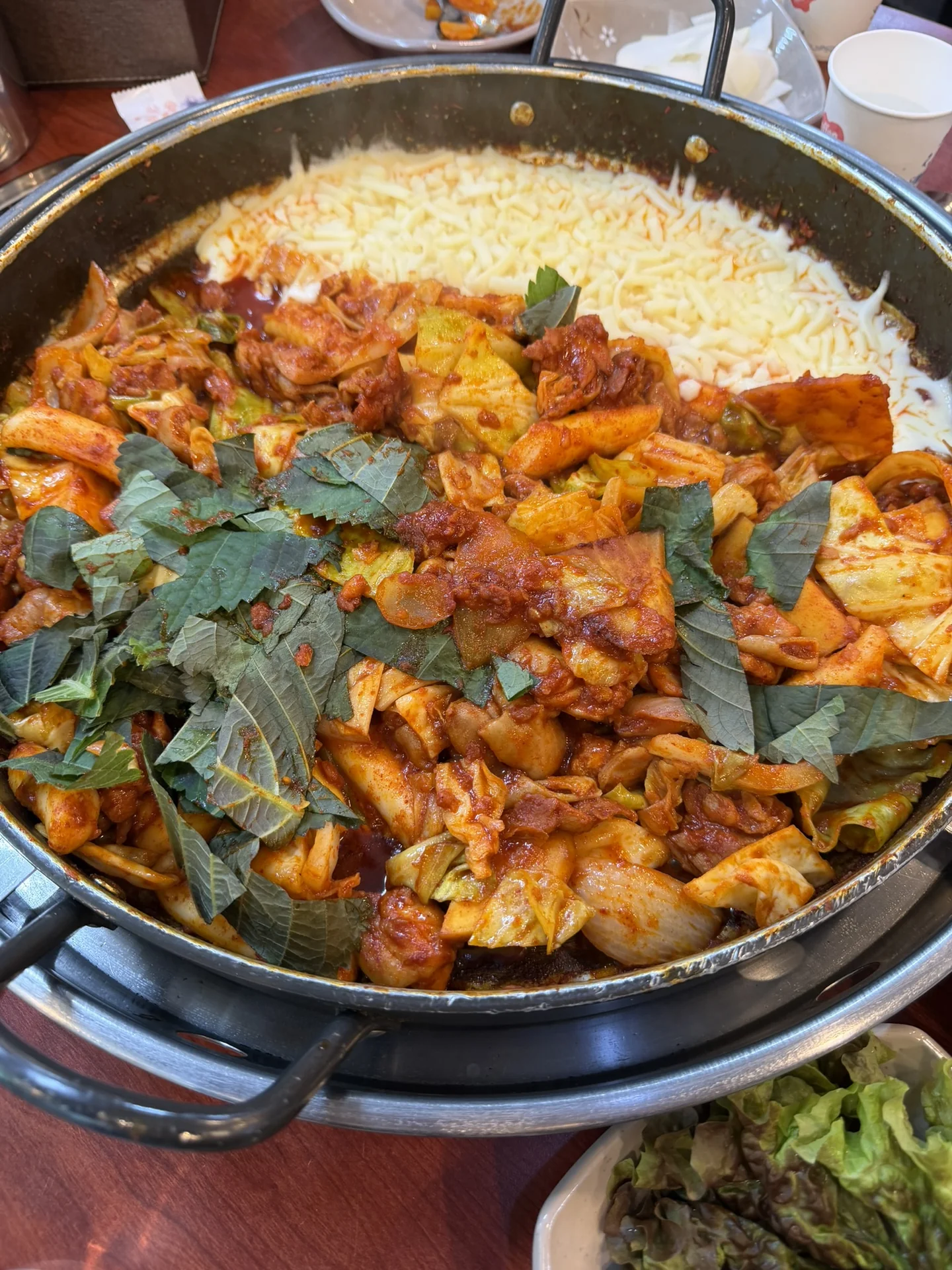 A sizzling iron plate loaded with cabbage, thick chicken thigh meat, and spicy sauce. Hard to resist.
Having had my blood sugar wrecked by rice noodles and bananas before, I was bracing myself. I figured the spike would be significant.
As soon as the Dakgalbi arrived, I started with the cooked cabbage. Then the thick chicken thigh pieces. I hadn’t ordered rice yet—I planned to get the fried rice after I’d had my fill of meat and veggies.
It Rose More Gently Than Expected
I checked the graph after eating, and it surprised me.
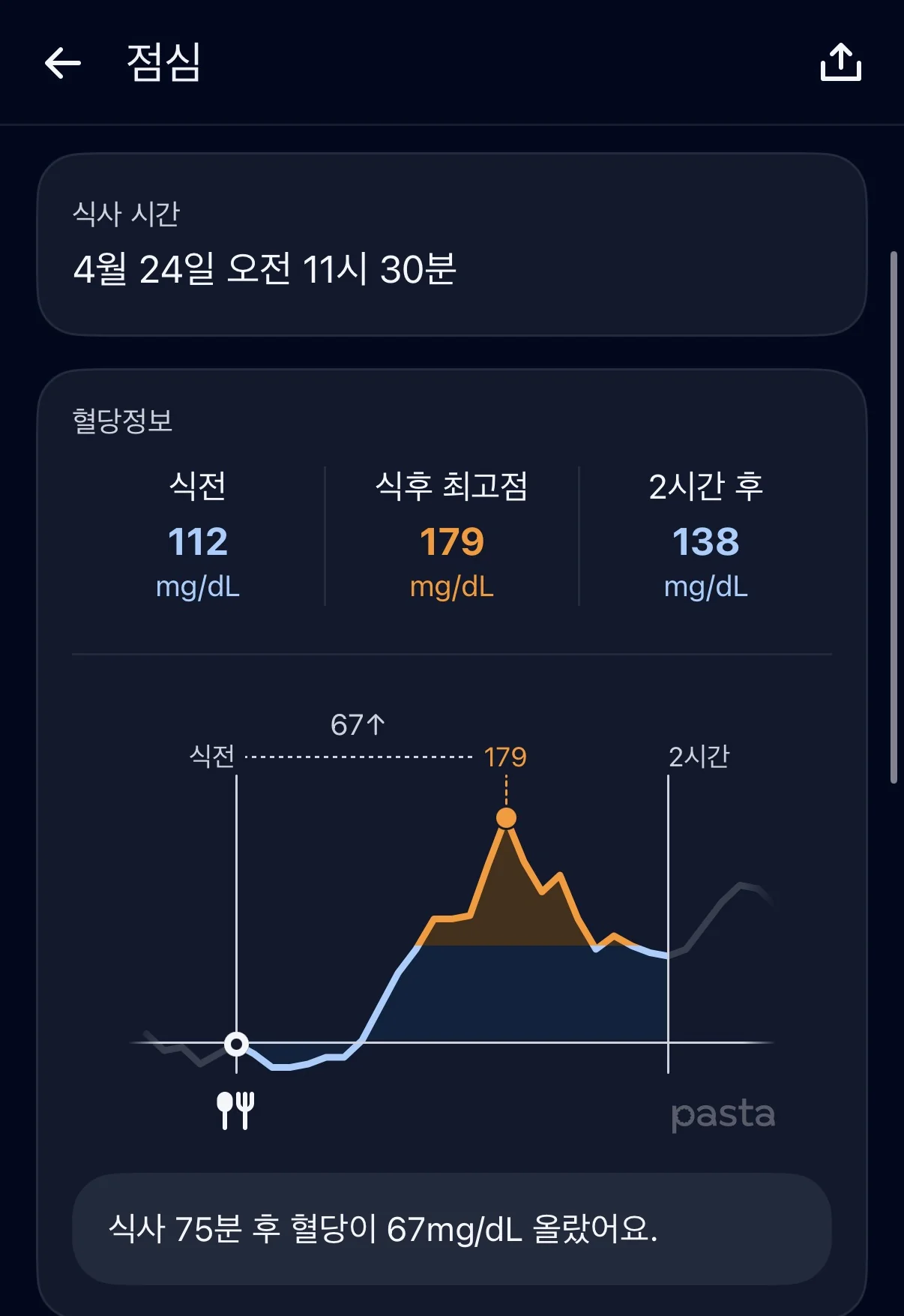 Blood sugar didn’t spike sharply—it rose in a gentle, gradual curve.
I fully expected it to shoot up. But the graph drew a surprisingly tame curve. It rose far less than I anticipated.
Thinking about it, this makes sense. Iron plate Dakgalbi is fundamentally cabbage (dietary fiber) and chicken (protein). The carbohydrate content is low, so it’s only natural that blood sugar rose slowly. On top of that, since I ate the veggies and protein first, my stomach already had a buffer, which likely slowed absorption even further.
So this is what the ‘Veggies ➔ Protein ➔ Carbs’ meal order actually looks like in practice. Now I was seeing the proof on my own body.
It Was Coming Down, Then Went Back Up—Probably the Fried Rice
After finishing the Dakgalbi, I ordered the fried rice. It’s the highlight of iron plate Dakgalbi, after all—you stir-fry rice in the leftover sauce. That’s just how it’s done.
I was already fairly full, so I only took a few spoonfuls. But a little while later, the graph told a different story: the blood sugar that had been gently rising and then starting to come down was climbing back up again.
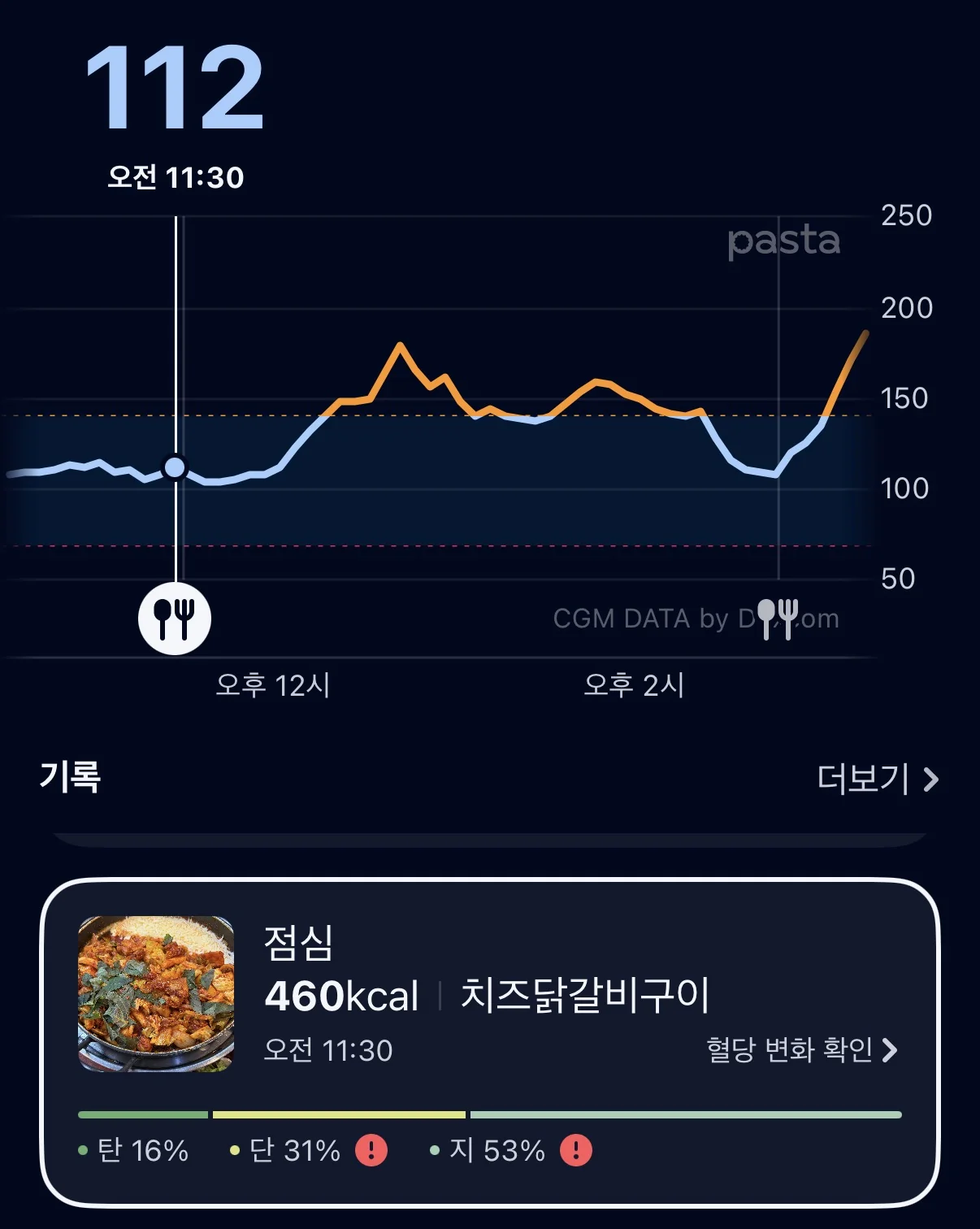 The blood sugar that was trending downward started rising again after the fried rice.
The timing lines up exactly with when I ate the fried rice. It was probably because of it. It wasn’t a crazy vertical spike like before—probably because the veggies and protein had built up a buffer. But once the carbs went in, blood sugar honestly trended upward again.
It’s the Carbs After All
One thing became very clear today.
What raises blood sugar is ultimately rice, noodles, and bread—carbohydrates. When I ate Dakgalbi, which is mainly protein and vegetables, my blood sugar rose slowly and stayed lower than expected. But once the fried rice entered the picture, the dropping graph turned back upward.
And eating veggies and protein first does seem to meaningfully slow down the absorption of carbs that come later. Thanks to that buffer, I avoided the wild spikes I used to see.
Going forward, at any meat restaurant: veggies first, meat next, rice dead last. Or honestly, skipping the fried rice altogether would be ideal… but let’s be realistic about that one.
[!TIP] The Importance of Meal Order (Veggies ➔ Protein ➔ Carbs)
For blood sugar management, the order in which you eat matters as much as the quantity. Consuming dietary fiber and protein first slows gastric emptying, preventing rapid absorption of carbohydrates eaten later. The Korean habit of ordering fried rice at the end of a meat meal turns out to be surprisingly scientific for blood sugar management!