![[CGM #7] Pear, Banana, and the Miracle of a 1-Hour Swim](/ko/cgm-day6-pear-banana-swim/cover_hu_2c13df298b0aa1f6.webp)
TL;DR
- I skipped a proper dinner after work and ate a pear and a banana instead. The power of a 96% carbohydrate meal was immense. My blood sugar skyrocketed to 214 in an instant.
- The moment the high blood sugar alert went off, I jumped into the pool and swam freestyle for an hour.
- My peaking blood sugar plummeted vertically, stabilizing back under 100 within an hour. The power of exercise is real.
This is a personal log, not medical advice. Talk to a medical professional about diagnosis or treatment.
Day 6 of Continuous Glucose Monitoring (CGM). Today was a day where I experienced an extreme spike and a vertical drop all at once.
I had a schedule where I had to go straight to the swimming pool right after work. I didn’t have time for a heavy dinner. Instead, the fruits I had saved from lunch caught my eye: a pear and a banana.
I remembered how a single banana in the morning raised my blood sugar to 153 yesterday (Korean), but since I was going to swim immediately after, I thought it wouldn’t be a bad choice to fuel up on some energy beforehand.
Table of contents
5:10 PM: Dropping a Carb Bomb
It was basically… just a pear and a banana. The calories were light at 275 kcal, but the nutritional composition was extreme: 96% carbohydrates, 3% protein, and 1% fat.
Shortly after eating, the blood sugar graph began to shoot up at a terrifying angle.
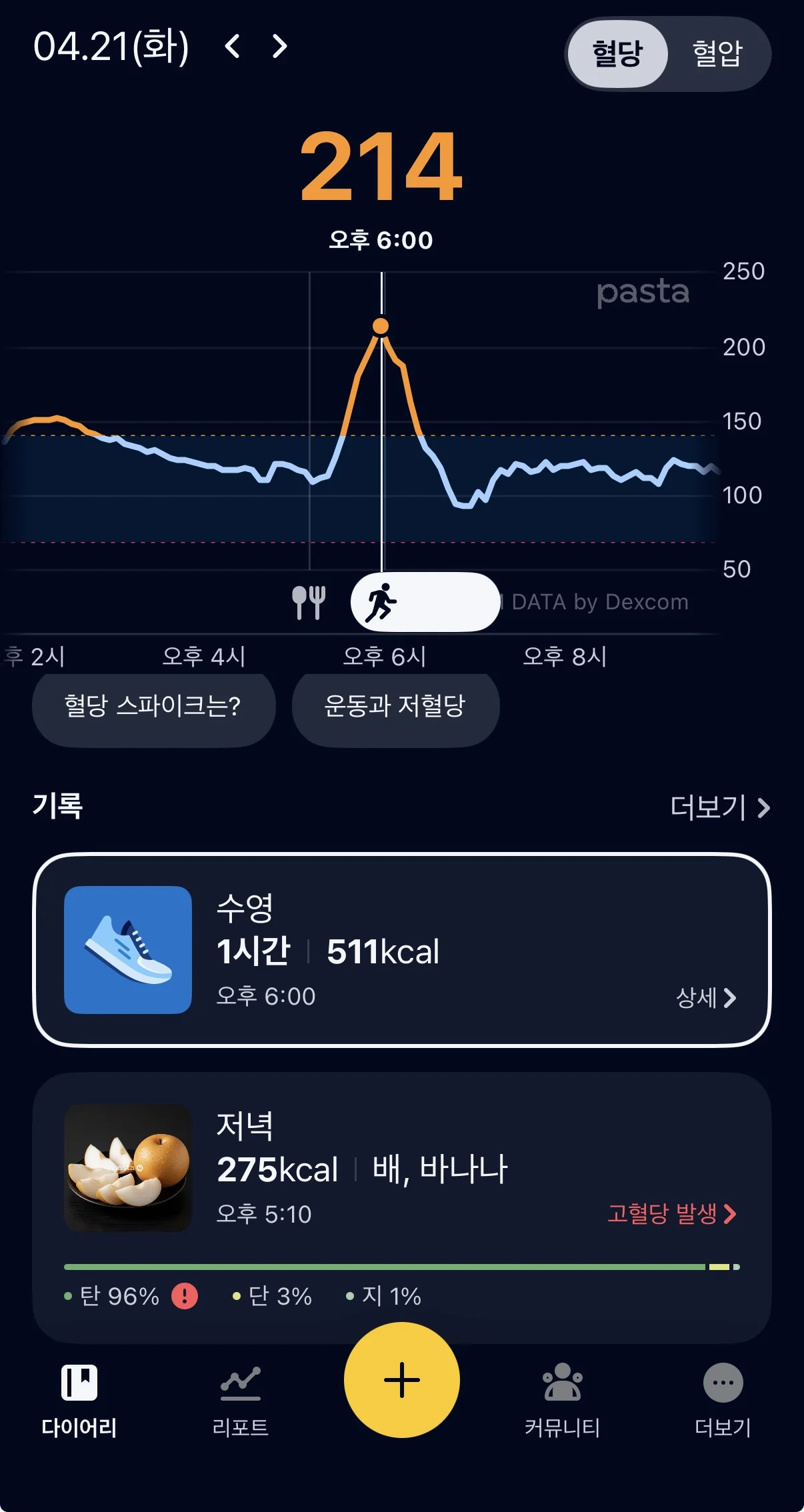 At 5:10 PM, after eating the pear and banana, blood sugar surged to 214. At 6:00 PM, a sharp drop occurred alongside the start of the swim.
Exactly at 6:00 PM. My blood sugar hit a staggering 214. It was higher than when I ate ramen yesterday (200). The app flashed a bright red “High Blood Sugar” warning.
6:00 PM: Evacuating to the Swimming Pool
However, there was one difference from yesterday. Yesterday, I sat still after eating ramen, but today, the moment my blood sugar peaked, I dove into the water.
From 6:00 PM, I swam for an hour, burning about 500 kcal. I pushed the pace hard enough that I was gasping for breath at times.
After finishing the workout, I checked my blood sugar graph. It was astonishing.
The graph, which had been soaring toward 214, took a vertical turn exactly at 6:00 PM and nose-dived. An hour later, my blood sugar had returned to a stable trajectory around 100. As my blood sugar dropped, my body felt noticeably lighter.
Is This Pattern Really Okay? (Spoiler: No, It’s Not)
A rollercoaster graph that’s hard to believe even when looking right at it.
You might be tempted to think: “If I eat whatever I want and just burn it off immediately with high-intensity exercise, isn’t that fine?” After all, a blood sugar spike occurred, but it didn’t last long and normalized quickly.
But it felt a bit sketchy, so I looked up some medical papers and data. The bottom line is: It is absolutely NOT okay.
The biggest issue isn’t just the ‘high number’ itself, but the Glycemic Variability—peaking and then crashing straight to the bottom. Studies show that even if your average blood sugar is low, having wide fluctuations can actually be more dangerous than sustained high blood sugar.
- Destruction of Endothelial Cells: When blood sugar swings wildly in a short period, a massive amount of reactive oxygen species (ROS) is generated. During this process, the endothelial cells lining the inside of your blood vessels take a severe hit. This triggers vasoconstriction and inflammation, acting as a fast track to cardiovascular diseases like arteriosclerosis.
- Overworking the Pancreas: To catch that soaring blood sugar, the pancreas has to pump out a massive amount of insulin in a short time. Even if you dropped your blood sugar through exercise, your pancreas was already screaming while dealing with that 214. If this pattern repeats, the insulin-secreting beta cells in the pancreas will eventually give out.
One thing is certain: Right after eating sugary foods or refined carbohydrates, you must exercise immediately to prevent a steep rise. But what’s even more certain is that not getting on this rollercoaster in the first place (by avoiding excessive simple sugars) is the only way to save your blood vessels and pancreas.
[!WARNING] Don’t be relieved just because you quickly dropped your blood sugar through exercise. The extreme glycemic variability that already occurred induces oxidative stress, damages blood vessel endothelial cells, and overworks the pancreas. The most important thing is to reduce the swing and maintain flat, stable blood sugar levels.
So, How Should I Eat From Now On?
Through today’s painful trial and error, I’ve decided to eat like this for my future meals:
- Do not eat fruit alone as a snack or meal replacement: Eating only fruits that are high in sugar and fast to digest, like pears or bananas, will result in a crazy spike like today.
- Pair it with meals or as a dessert: If you really want fruit, eat it after a meal or alongside a meal containing protein and fat to slow down the absorption rate.
- The ‘Veggies (Fiber) → Protein → Carbs’ sequence is science: Shoving simple sugars straight into an empty stomach is like throwing a punch at your pancreas. You have to set up a shield with vegetables first.
Tomorrow, I’m going to test a meal that actually has a proper shield set up.