![[CGM #6] Banana 153 vs Ramen 200](/ko/cgm-day5-banana-and-ramen/cover_hu_1f4f944a14c5bc43.webp)
TL;DR
- Had 1 banana for breakfast. Thought it was harmless, but it spiked to 153. Gotta be careful with fruit too.
- For lunch, I made Ottogi ramen with two eggs, followed by a Bungeoppang ice cream. Hit exactly 200.
- Ramen is ultimately a refined carbohydrate. Just like rice noodles, it spikes your blood sugar and keeps it high.
This is a personal log, not medical advice. Talk to a medical professional about diagnosis or treatment.
Continuous Glucose Monitoring (CGM) Day 5. I’ve tested quite a bit so far.
Today was the day I visually confirmed how much ordinary, simple meals spike my blood sugar. Especially fruit. Fruit is healthy, so it should be fine, right?
The numbers were cold.
Table of contents
Breakfast: 1 Banana
9:22 AM. I peeled and ate a single banana for breakfast. Didn’t eat anything else.
Bananas are a staple for dieting and the poster child for healthy snacks, so I thought, “How much could it possibly raise my blood sugar?”
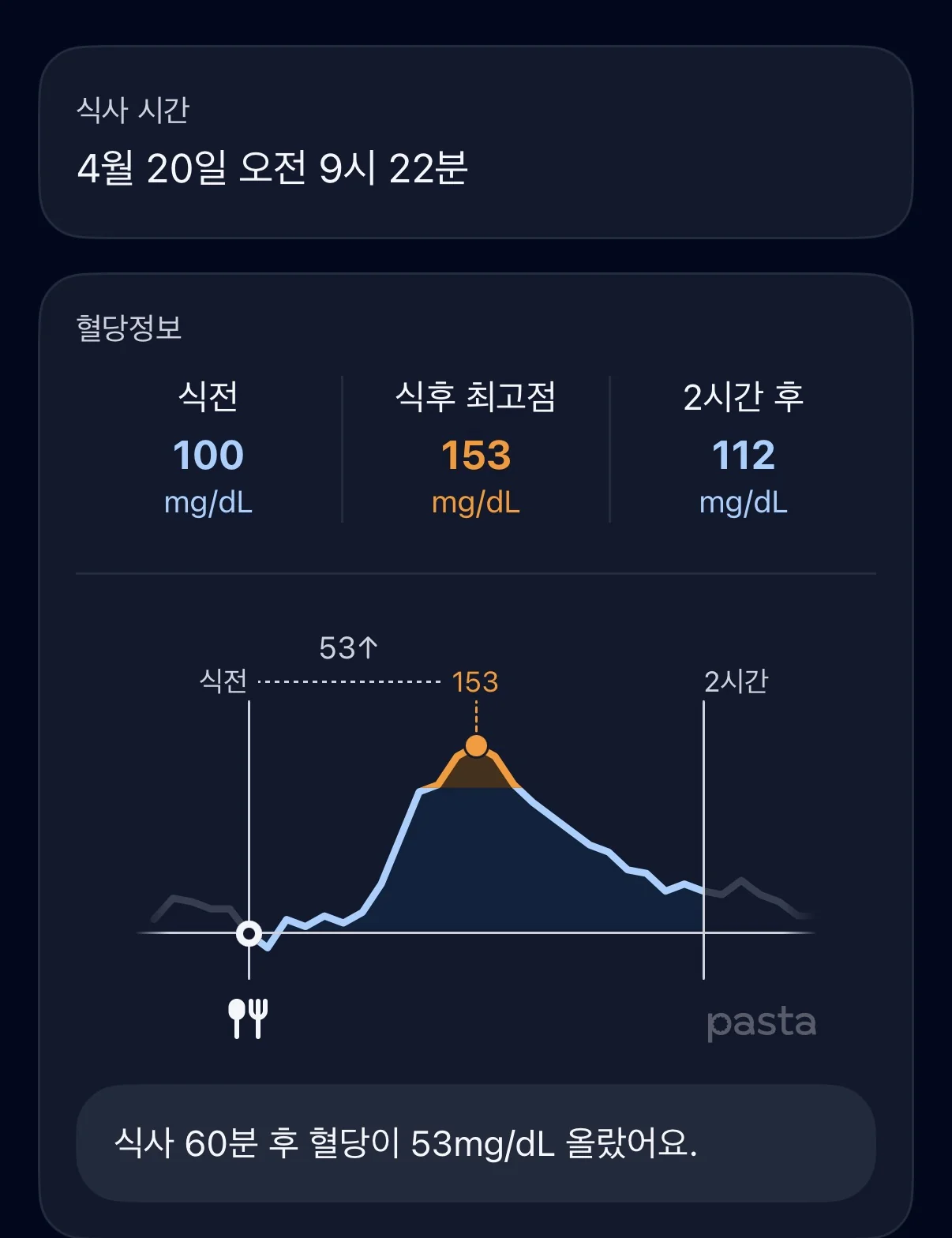 Pre-meal 100 → Peak 153 → 2h after 112. “Blood sugar rose 53 mg/dL 60 minutes after meal.”
Pre-meal 100. Peak 153. After 2 hours: 112.
It went up by 53. That’s above the normal range (140).
Wow, bananas really do raise your blood sugar quite a bit. I looked it up and found that as a banana ripens, its starches turn into sugars, increasing its Glycemic Index (GI). The one I ate was a nice, ripe yellow one, so maybe this result was inevitable.
Still, it came down to a reasonable 112 after 2 hours. But it made me realize I should probably eat them before or after a workout when I need the energy, rather than just eating one while sitting around.
Lunch: Ramen + 2 Eggs + Ice Cream
12:01 PM. I boiled Ottogi “O Ramen” for lunch. It wasn’t really a tactical move to defend against a blood sugar spike; I just really like eating ramen with eggs.
So I added not one, but two eggs. Lots of protein.
And since I had something spicy and salty, I craved something sweet, so I had a Bungeoppang (fish-shaped) ice cream for dessert.
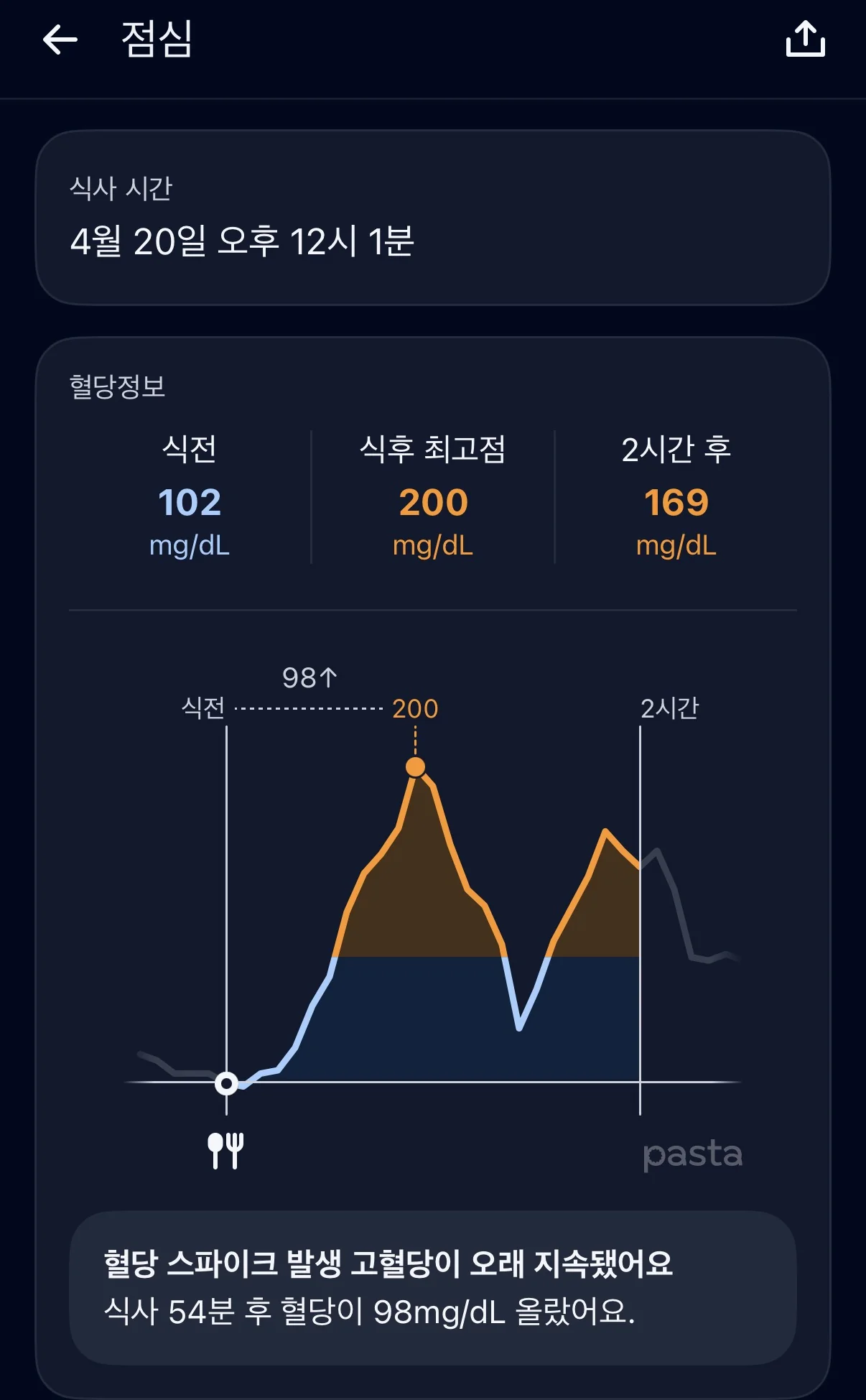 Pre-meal 102 → Peak 200 → 2h after 169. “Blood sugar spike detected. Elevated glucose persisted.”
Pre-meal 102. Peak 200. After 2 hours: 169.
It shot up by 98. Hit exactly 200. This is almost the exact same pattern as the rice noodles (211) I had on Day 2.
If you look closely at the graph, it looks like a two-humped camel—it drops slightly in the middle and then rises again. That second push was probably the ice cream coming in right after the ramen.
Even after 2 hours, it’s stuck at 169. The app threw another warning: “Elevated glucose persisted.”
Ramen is Ultimately a Refined Carb
I tried to defend myself with two eggs, but it wasn’t enough. The ramen noodles themselves are just a mass of refined wheat flour. Whether it’s rice noodles or wheat noodles, once they enter my body, as pulverized refined carbs, they explosively raise my blood sugar. That is now very clear.
Add a sweet ice cream dessert on top of that, and it’s impossible not to hit 200.
Getting hit with facts via numbers like this changes your perspective. I really need to cut back on ramen. Or if I do eat it, I should eat less of the noodles and broth, or at least go for a jog around the neighborhood afterward.
I should just eat a salad for lunch tomorrow.
[!TIP] Unripe (green) bananas have a lot of resistant starch and a lower GI, but fully ripe bananas are high in sugar and will spike your blood sugar quickly. For refined carbs like ramen or rice noodles, just adding a little protein isn’t enough to completely prevent a blood sugar spike.