![[CGM #4] Kimbap 176, Buffet 154](/ko/cgm-day3-kimbap-buffet/cover_hu_6e84ca9b8b485d1d.webp)
TL;DR
- Day 3. Kimbap for breakfast → 176. Buffet (no carbs) for lunch → 154.
- Night and day compared to the 200+ spikes from the first two days.
- Take out the refined carbs (rice noodles, porridge) and blood sugar calms right down.
This is a personal log, not medical advice. Talk to a medical professional about diagnosis or treatment.
Continuous Glucose Monitor (CGM), Day 3.
Over two days, I logged porridge (202), pho (211), and steak + rice (137). Day 1 and Day 2 both broke 200, and I managed to bring it down to 137 with cabbage and swimming at dinner.
Day 3, no special strategy. Just ate normally.
Table of contents
Breakfast: One Roll of Kimbap + Kimchi
8:38 AM. Breakfast was one roll of kimbap with kimchi on the side. A completely ordinary Korean breakfast.
I was curious how much kimbap would spike my blood sugar. Since the rice is pressed tightly into each roll, I figured there’s probably more rice per bite than you’d think.
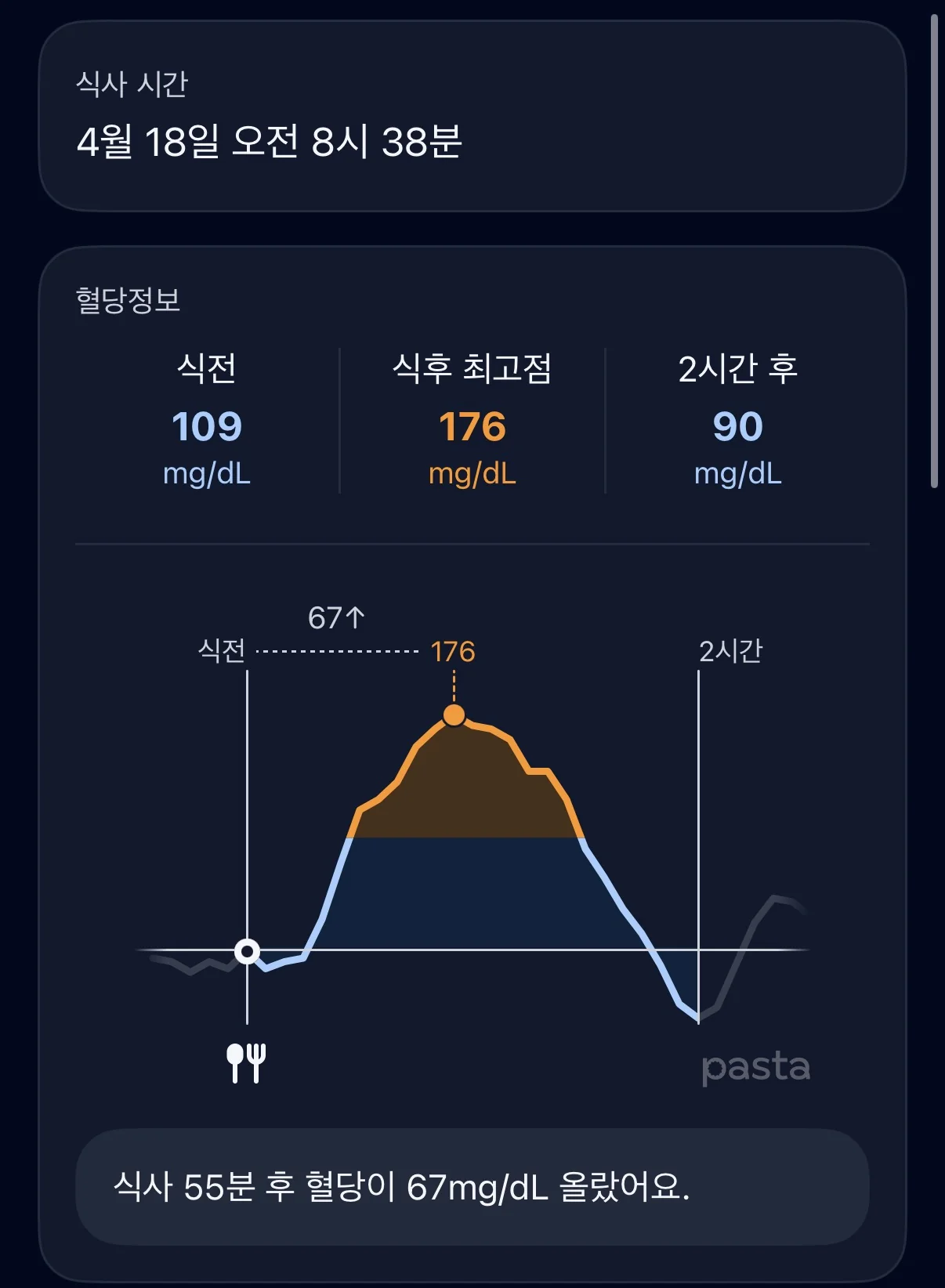 Pre-meal 109 → Peak 176 → 2 hours later 90. “Blood sugar rose 67 mg/dL 55 minutes after the meal.”
Pre-meal 109. Peak 176. Two hours later, 90.
176 is above the normal range (140), but compared to the 202 and 211 from the previous two days, it’s a clear improvement. And it came back down to 90 within two hours — clean recovery. Previously, blood sugar was still at 166 after two hours. The recovery speed is noticeably different.
One roll of kimbap seemed to be a manageable amount. Two rolls might have pushed it past 200.
Lunch: Buffet — No Refined Carbs
2:27 PM. Went to a buffet for a late lunch that doubled as dinner. Focused on salmon, beef, and other proteins. Skipped the rice, noodles, and bread.
One thing was slightly different: I went for a casual one-hour walk before the meal.
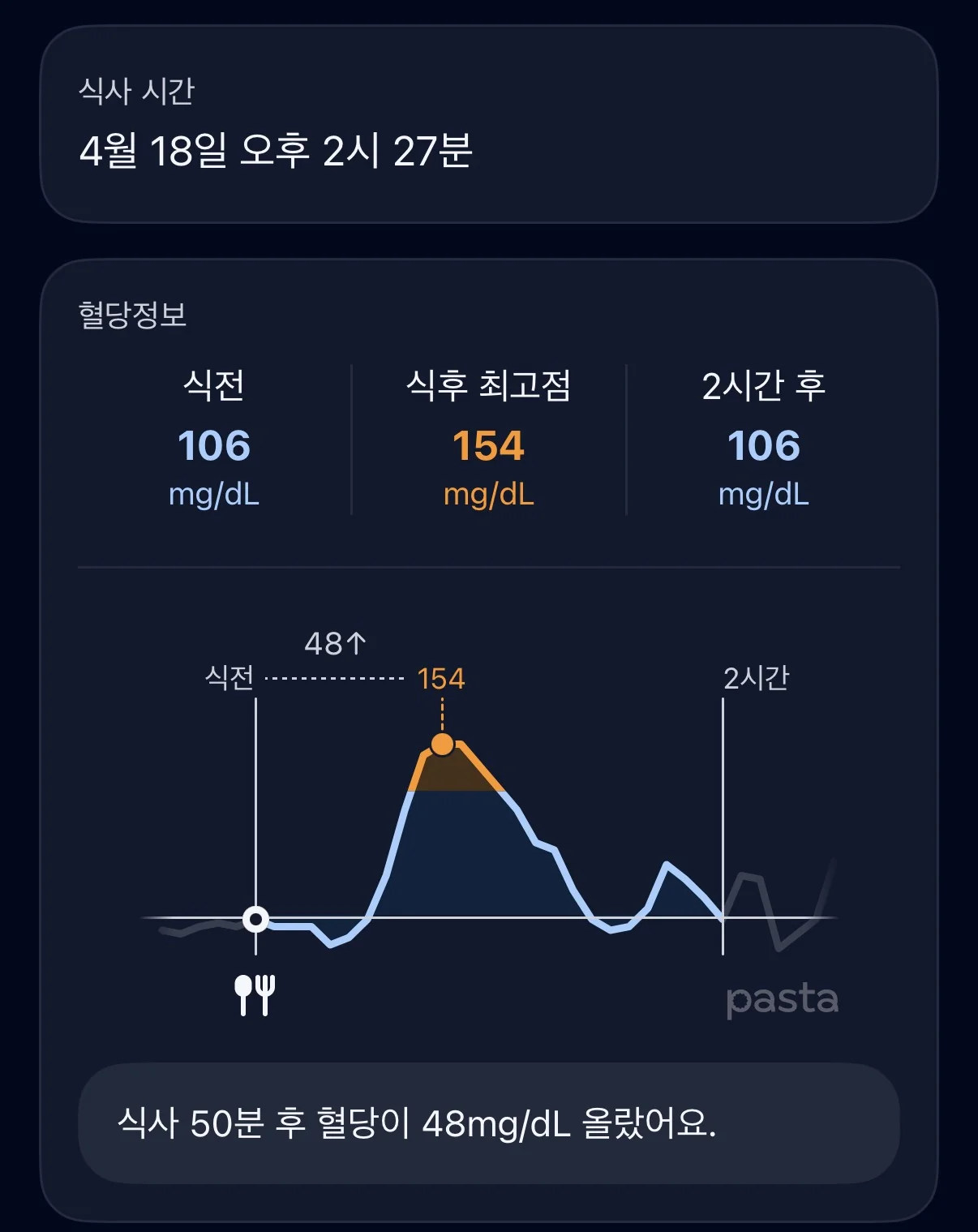 Pre-meal 106 → Peak 154 → 2 hours later 106. “Blood sugar rose 48 mg/dL 50 minutes after the meal.”
Pre-meal 106. Peak 154. Two hours later, 106.
Only went up 48. I ate until I was full at the buffet, but blood sugar peaked at 154 and returned to baseline within two hours.
No rice, no noodles — just meat and fish. And the result was noticeably different. I ate until I was full, and blood sugar barely moved. The one-hour walk before the meal might have helped too.
Three Days of Data
| Day | Meal | Pre-meal | Peak | After 2hr | Spike |
|---|---|---|---|---|---|
| Day 1 | Porridge | - | 202 | - | - |
| Day 2 Lunch | Pho | 87 | 211 | 166 | +125 |
| Day 2 Dinner | Steak + Rice | 96 | 137 | 96 | +41 |
| Day 3 AM | Kimbap | 109 | 176 | 90 | +67 |
| Day 3 PM | Buffet (no carbs) | 106 | 154 | 106 | +48 |
The pattern is getting clearer.
The 200+ spikes came from porridge and pho — both pure refined carbs. Steak with rice stayed at 137 thanks to cabbage and swimming. Kimbap stopped at 176 because I kept it to one roll. The buffet peaked at just 154 because refined carbs were off the table.
[!TIP] Kimbap has high carb density because the rice is pressed tightly into each roll. One roll is manageable, but two or more significantly increases spike risk. Protein and fat-focused meals raise blood sugar gently. A light walk before eating can also help with post-meal blood sugar management.
Remove the Refined Carbs, and Things Calm Down
What I’ve learned over three days is simple.
When refined carbs (porridge, rice noodles, white rice) go in, blood sugar shoots up. More quantity means a higher spike. Take them out, and things calm down.
Of course, you can’t avoid carbs entirely. I eat kimbap, I eat rice. That’s just normal life. But now I know — in actual numbers — which carbs, how much, and under what conditions spike my blood sugar. That’s the whole reason I put on the CGM, and three days in, I’ve learned quite a lot.
What should I eat tomorrow? At this point, I’m ready to open the app no matter what I eat.