![[CGM #9] Sundaeguk and the 'Pause Button' of a 30-Min Walk](/ko/cgm-day8-sundaeguk-walking/cover_hu_f720d9216b20e717.webp)
TL;DR
- I ate Sundaeguk (blood sausage soup) and white rice for lunch, then went for a 30-minute walk to prevent a blood sugar spike.
- While walking, my rising blood sugar miraculously dropped. The power of exercise was amazing.
- However, the moment I stopped walking and sat down, the ‘paused’ blood sugar shot right back up, hitting 187. The walk was merely a ‘delay,’ not an ’eraser.’
This is a personal log, not medical advice. Talk to a medical professional about diagnosis or treatment.
Day 8 of Continuous Glucose Monitoring (CGM). After deeply experiencing the terror of liquid fructose yesterday (Korean), I decided to properly test the effect of post-meal exercise on my blood sugar today.
The menu was my usual hearty favorite: Sundaeguk and white rice.
Table of contents
11:29 AM: The Sundaeguk and Walking Combo
For a soup lover, Sundaeguk is a soul food you can’t give up. But I already know that hot white rice mixed into a boiling broth is a primary culprit for blood sugar explosions.
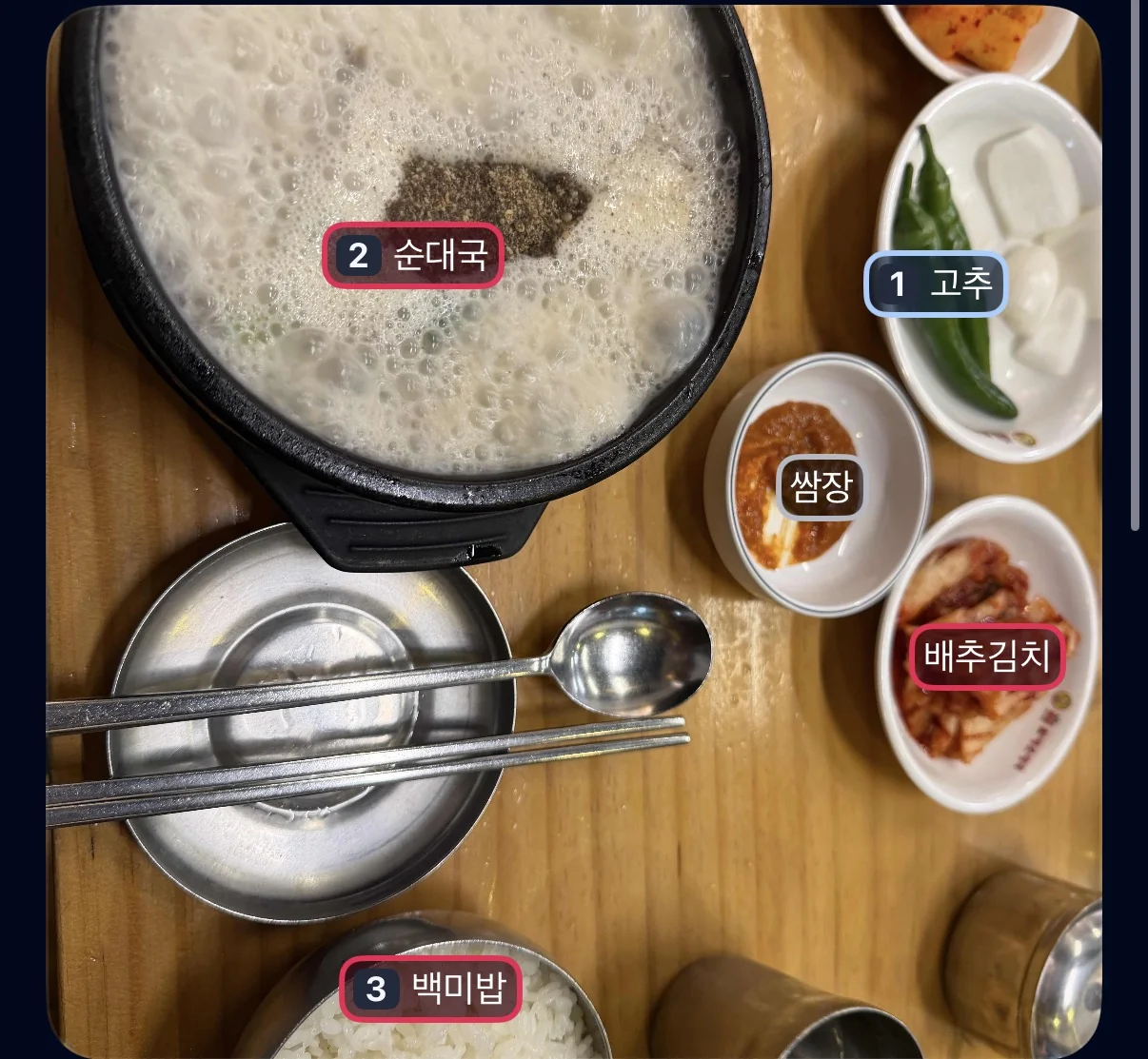 Hot broth, white rice, salty kimchi, and ssamjang. A perfect culinary combination, but fatal for blood sugar.
So today, I changed my strategy. As soon as I finished eating, I went straight outside and took a light 30-minute walk. Having experienced crashing my blood sugar with an hour of swimming, I believed walking would definitely be effective too.
The result was half success, half shock.
Blood Sugar 187: Walking Was Just a ‘Pause’ Button
While walking, I checked the app. The blood sugar graph, which had started to rise right after eating, bent downwards and returned to normal levels. “Ah, a post-meal walk is indeed the answer!” I cheered inwardly.
But the real twist happened right after the walk ended and my butt hit the office chair.
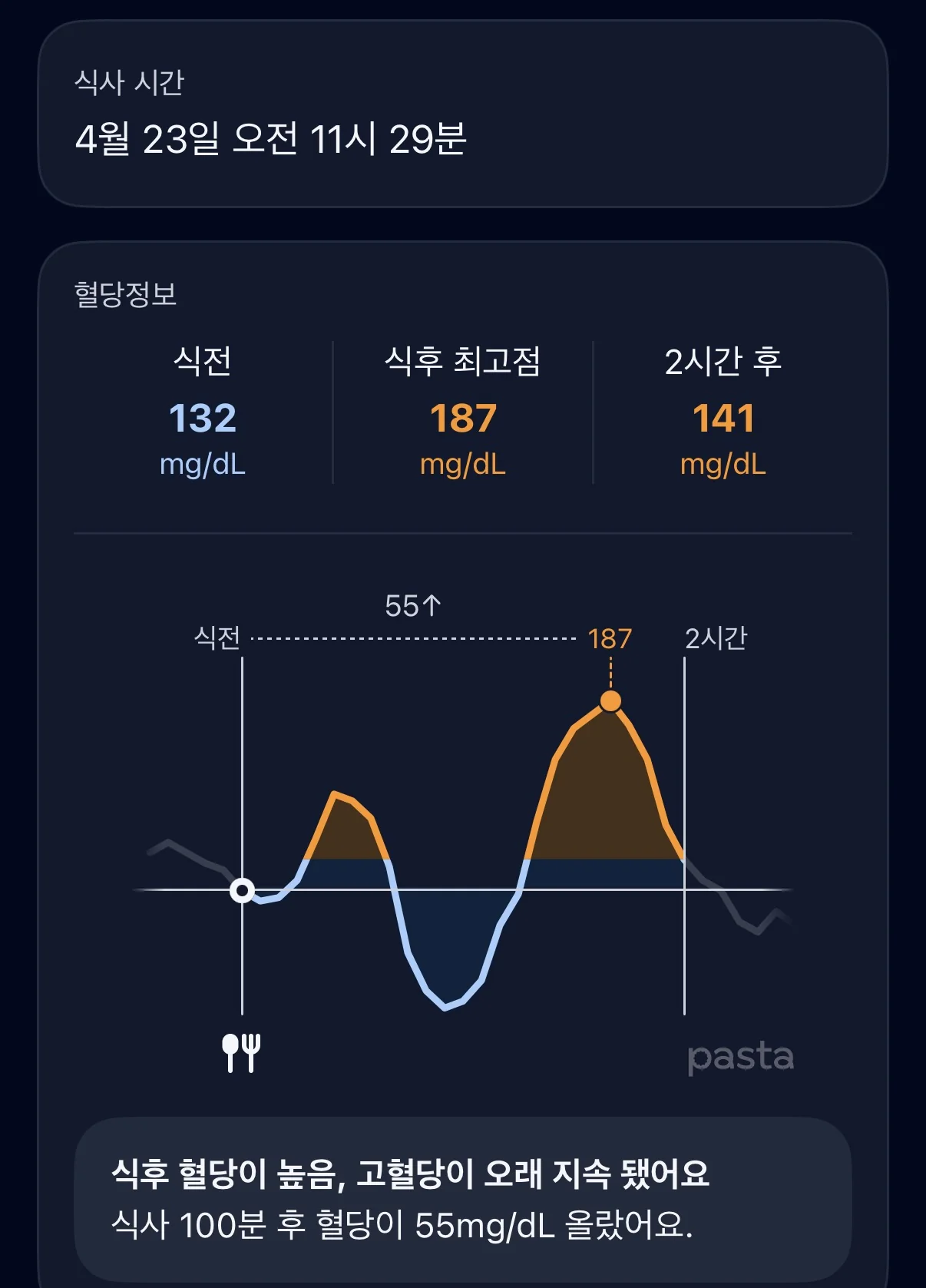 Pre-meal 132. The blood sugar, which was dropping during the walk, surged after I stopped, hitting 187 after 100 minutes.
The deep valley (dip) in the middle of the graph is the 30 minutes I spent walking. But the moment I stopped and sat down, my blood sugar started to shoot up again like a coiled spring. Eventually, 100 minutes after the meal, it hit a dizzying peak of 187.
The app flashed a red warning: “High post-meal blood sugar, high blood sugar sustained for a long time.”
Carbs Don’t Evaporate Just Because You Walk
Through today’s trial and error, I realized a very important fact. A post-meal walk is not a magic eraser that makes digested carbohydrates vanish.
- Glucose Consumption by Muscles: While walking, leg muscles use up a lot of energy, immediately burning the sugar entering the bloodstream. Thus, blood sugar drops.
- Digestion Continues: However, the Sundaeguk and rice in my stomach are still being digested.
- Unpausing: When the walk stops, muscles no longer actively use sugar, but the intestines are still pushing digested glucose into the blood. Ultimately, the unburned sugar rushes in all at once, creating a second spike.
What If I Had Walked for 1 Hour?
What if I had enough time during lunch to walk for over an hour? My muscles would have probably burned the carbohydrates from the Sundaeguk as soon as they entered my bloodstream, keeping the blood sugar graph steadily defended around 130.
However, in a busy daily life, consistently practicing a ‘1-hour post-meal walk’ is realistically not easy. Since squeezing in even a 30-minute walk requires effort, it’s difficult to rely solely on walking for an hour after every meal without adjusting the diet.
In the end, the total amount of carbohydrates I absorb doesn’t betray me. A short walk is an excellent ‘speed bump’ that delays the spike and shaves off the peak, but it’s not magic that burns sugar without a trace. The true fundamental solution is simply to cut the amount of white rice (carbohydrates) going into my mouth in half from the start.
[!IMPORTANT] A post-meal walk is an excellent habit to prevent sharp blood sugar rises. However, if your meal portion was too large or high in carbs, a light walk alone cannot burn all the sugar. Be aware of the ‘Rebound Spike’ phenomenon, where blood sugar rises again after the walk ends.