Direct Answer & TL;DR
- The Verdict: While buying FSD upfront is a gamble, I’ve decided to protect the value of my EAP investment and bet on the hardware upgrade promise.
- The Core Dilemma: My original plan was to wait until FSD was actually applied and functional on HW3 before buying. However, the deadline forces me to hit the ‘Buy’ button before the software is even ready for my car. This paradoxical situation—buying before seeing it work—was my biggest dilemma.
- My Choice: I’ve decided to bet $2,000 (as an EAP owner) on this aging hardware stack. This post explains why I’m choosing “ownership” over “subscription.”
Introduction: Elon’s Sudden ‘Last Call’
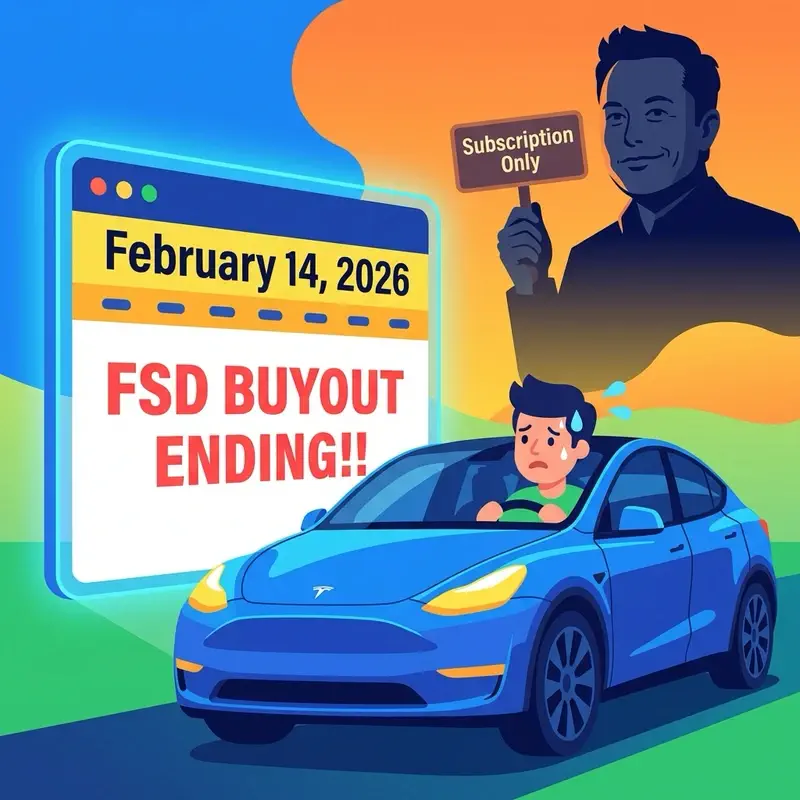
I woke up to X (formerly Twitter) buzzing with news. Elon Musk announced that “After February 14, 2026, Tesla will no longer offer FSD as a one-time buyout.” From then on, it’s Subscription Only.
My car is a 2022 US-made Model Y with Hardware 3 (HW3). Having already paid for EAP (Enhanced Autopilot), this ‘FSD discontinuation’ news gives me quite a headache. “If I don’t buy it now, will I never own it?” That classic FOMO is real.
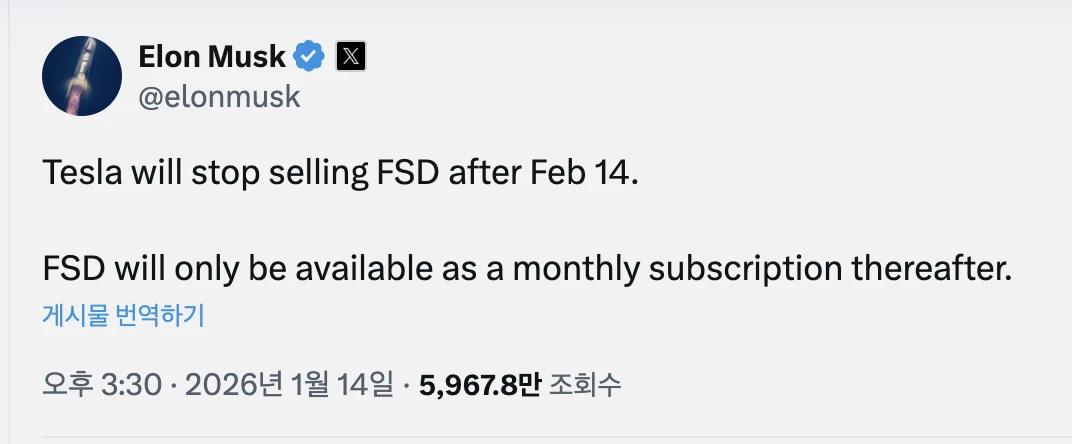 The official announcement from Elon Musk on X. The February 14th deadline is crystal clear.
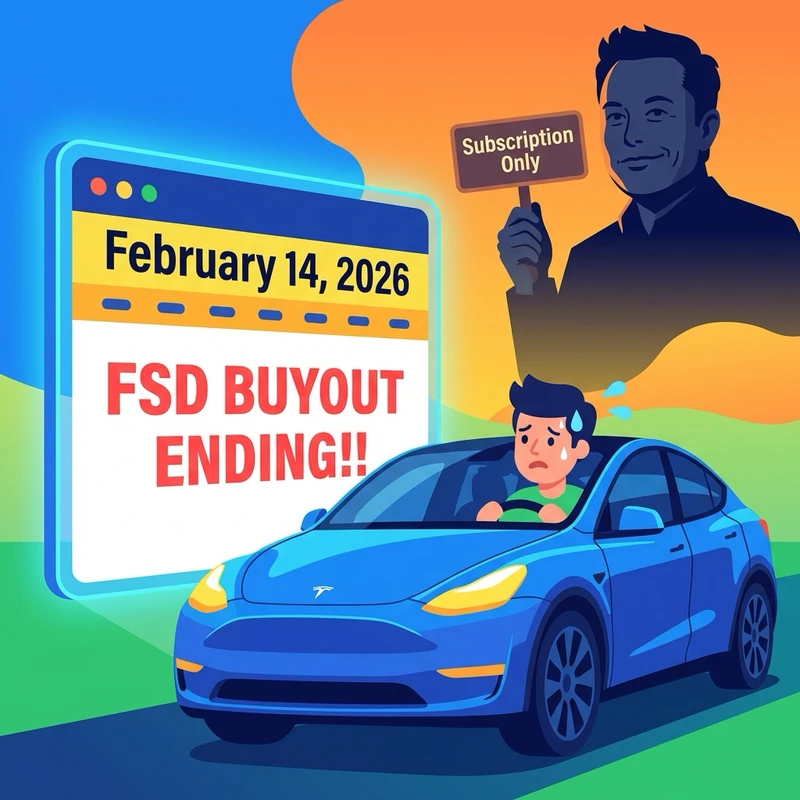 As February 14 approaches, Tesla owners’ heart rates are rising.
Beyond the marketing spin, though, there’s a real hardware performance gap Korean owners are staring down.
The Core Dilemma: HW3 vs. HW4 Technical Gap
The situation for Tesla owners, especially those with HW3, is at a crossroads:
- HW4 Is the New Standard: US-made Model X, S, Y, and Cybertrucks with HW4 are already enjoying the latest FSD (Supervised) with better camera resolution and processing power.
- HW3’s Long-Term Viability: While HW3 currently runs FSD, the gap between it and HW4 is widening. We are seeing more “Lite” versions of software being discussed for older hardware.
- The Q2 ‘FSD Lite’ Promise: Tesla’s AI head mentioned ‘FSD v14 Lite’ for HW3 around Q2 2026. This suggests that while HW3 isn’t dead, it’s definitely entering a “legacy support” phase.
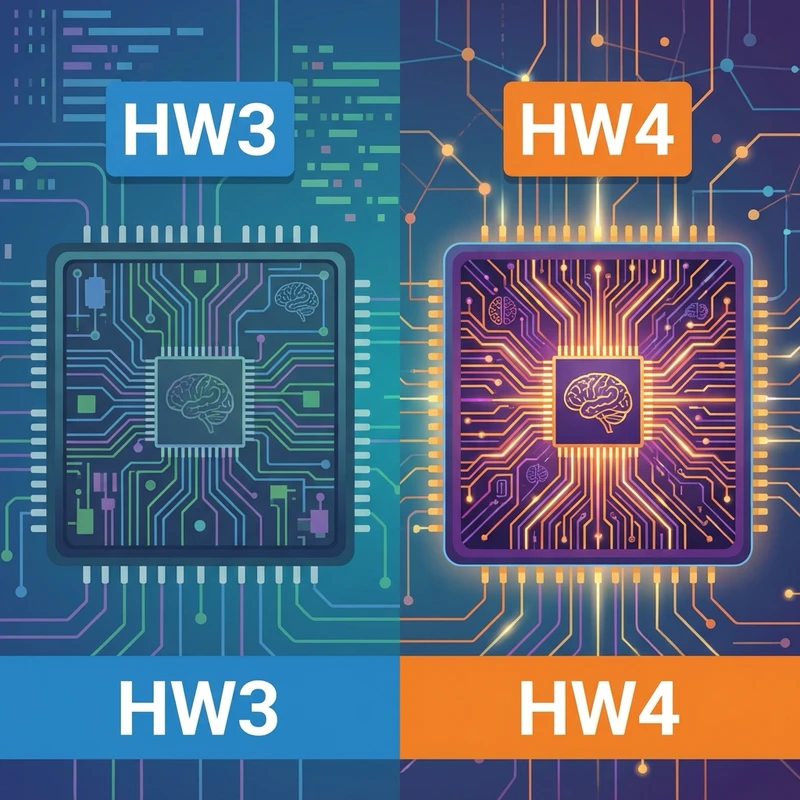 The physical gap between HW3 and HW4 is massive. Even Elon Musk admitted there’s a chance HW3 might not reach the safety required for unsupervised driving.
So, buying FSD now is essentially “pre-paying thousands of dollars for a lifetime license on hardware that might soon be the bottleneck.” If HW3 is eventually deemed insufficient for future autonomy levels, would a one-time purchase guarantee a free upgrade? That’s the multi-thousand dollar question.
Beyond the technical uncertainty, there’s also the money and the opportunity cost to weigh against the subscription.
Financial Analysis: One-Time Purchase vs. Monthly Subscription
For most owners in the US today, the choice is between paying $8,000 upfront or subscribing for $99/month. (Note: Tesla discontinued EAP for new sales in April 2024; legacy EAP owners can still upgrade for $2,000).
- Break-even Point: Approx. 80 months (about 6.5 years) for a new $8,000 purchase vs. subscription.
- Why the US Pricing is Different: Unlike Korea, where EAP acts as a middle tier at half the price, the US has simplified its model to FSD-only. This means new buyers in the US face a higher entry price for ownership, but the subscription ($99) is now the most popular entry point by far.
- The ‘Buyer Perk’: Even with the high price, buying FSD outright guarantees a free HW3 to HW4/AI5 upgrade if required for the software. Subscribers typically do not get this hardware retrofit for free.
- Variable 1: Will I keep this car for 6+ years? Looking at the 80-month break-even, the subscription is often the more logical choice for those planning to upgrade cars sooner.
- Variable 2: Will the ‘Lite’ version be satisfying? If HW3’s physical limits mean it can’t match HW4’s performance, I’ll regret that big upfront payment.
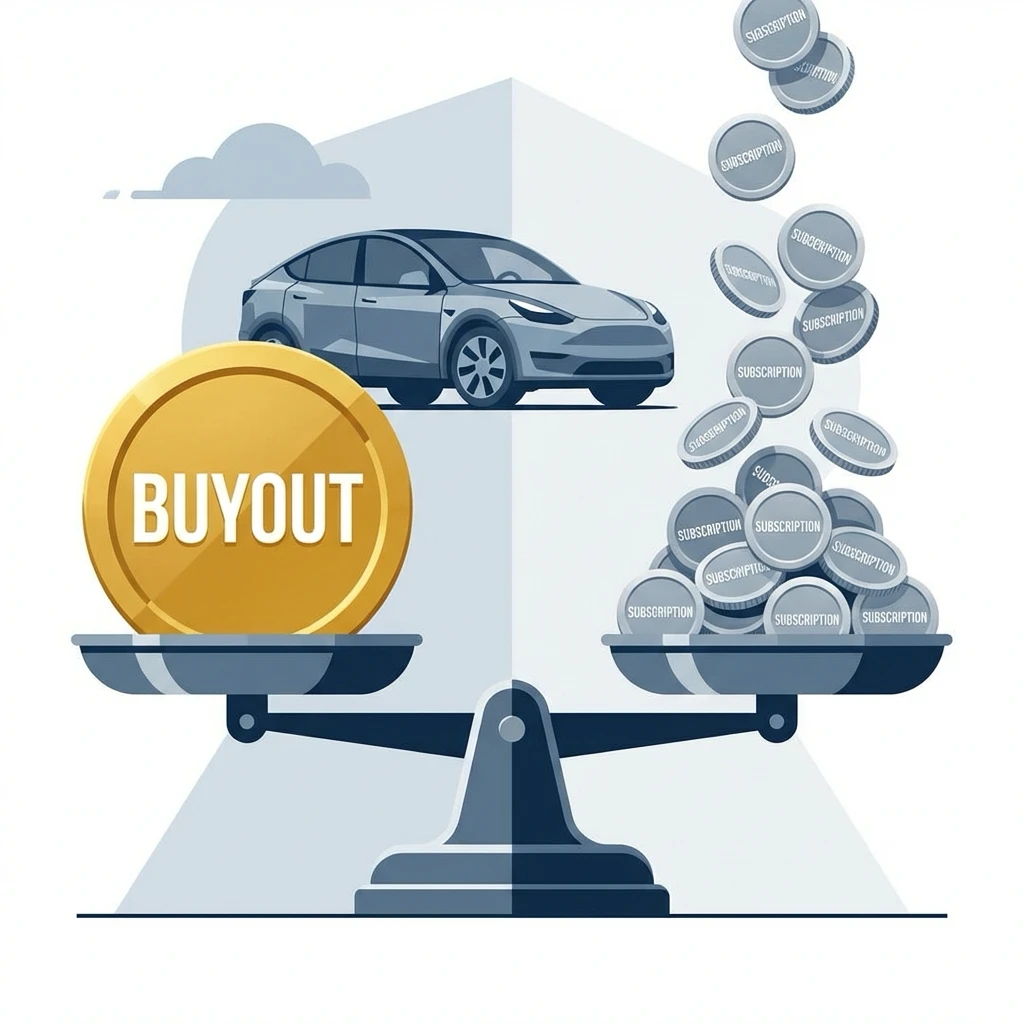 A heavy upfront cost or a flexible subscription? For EAP owners, the dilemma is even more intense.
My Take: I’d rather take that $8,000 and buy Tesla stock. When FSD Lite drops in Q2, I can subscribe for a month to see if it’s worth it.
After running these numbers, my actual decision might look a little irrational.
My Decision: The Logic Behind Betting on Uncertainty
The biggest hurdle was the timing. My original plan was to wait until FSD was properly applied and functional on HW3 before making the purchase. But Tesla’s “last call” for buyouts is forcing my hand, pushing me to pay before I can even verify the performance on my own hardware. Buying before seeing it work created a massive internal dilemma.
Conclusion: Expectations for the Hardware Update Promise
In the end, before the February 14 deadline, I decided to hit the ‘Buy’ button anyway.
Of course, there is a real risk that this could be a “waste of money” if FSD never properly lands on HW3. But while my “wait-and-see” plan fell apart, the decision ultimately came down to that sliver of a promise from Elon Musk: if HW3 can’t handle FSD, Tesla will provide a hardware update. Betting on that promise and securing my rights as an “Owner” feels like the only way to avoid the regret of missing the buyout window and letting my previous EAP investment go to waste.
As soon as I complete the purchase and start testing FSD on my HW3 Model Y, I’ll post a detailed follow-up on my experience.
References
Next Steps
- Tesla Premium Connectivity Alternative: iPhone Hotspot Automation Tips
- Coming Q2 2026: FSD Lite Real-world Driving Review (fingers crossed)