Direct Answer & TL;DR
- One-Line Verdict: If ‘The Way of Water’ was a visual marvel, ‘Fire and Ash’ is a film that presents the cruelty hidden behind Pandora’s beauty and poses deep philosophical questions.
- Epic Aerial Battles: It delivers overwhelming aerial tactics and visuals that make you forget the underwater action of the previous film.
- Blurred Moral Lines: Through the new tribe ‘The Ash People,’ it shows that the Na’vi can also harbor hatred and destruction, much like humans.
Introduction: Returning to Pandora, Expectation vs. Concern
After the radiant blue impression left by ‘The Way of Water,’ the news of Avatar: Fire and Ash brought excitement along with a touch of anxiety. “Could the master’s next step be trapped in the shadow of the previous work?” But James Cameron once again proved those worries were unfounded. This time, instead of the peaceful harmony of nature, we witness another face of Pandora—one oscillating within intense heat and gray volcanic ash.
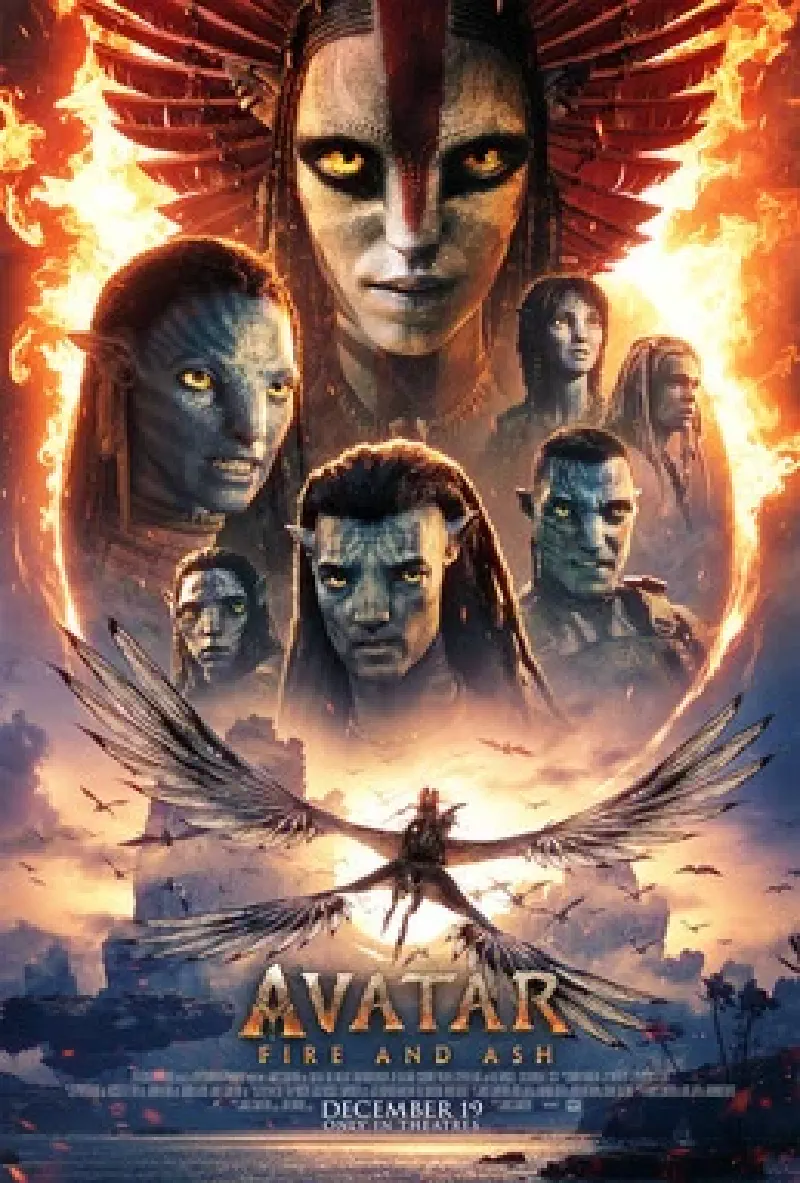
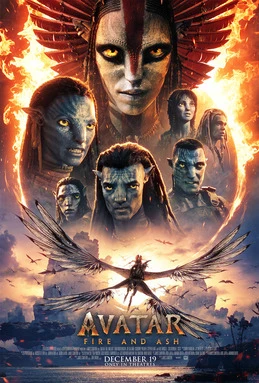 Avatar: Fire and Ash official poster. The gaze of the new tribe revealed amidst flames carries a chill distinctly different from previous Na’vi tribes.
Worldbuilding Expansion: Breaking the Na’vi Formula
The true protagonists of this film are undoubtedly The Ash People. As symbolized by their gray skin and intense orange eyes, they are a formidable tribe worshipping fire and surviving in Pandora’s harsh volcanic regions.
Their appearance is interesting because it boldly breaks the series’ formula of ‘Na’vi = Absolute Good.’ Their hatred-filled demeanor sends a powerful, unfamiliar message to the audience: “Living as part of nature doesn’t always mean peace.”
Beyond cultural expansion, the film reaches new heights in its technical execution and visual storytelling.
Technical Visuals: Redefining the Scale of Aerial Combat
Honestly, the highlight of this film is the aerial battle sequences. While ‘The Way of Water’ focused on the static beauty of the underwater world, this installment is ruled by dynamic power, defined by a sense of speed and impact.
- Scale: A massive melee with dozens of Ikran and RDA warships soaring through the clouds fills the entire field of vision.
- Dynamism: The first-person flight sequences provide a thrilling immersion, as if the audience is actually riding on the back of an Ikran.
- Tension: Life-or-death chases through showers of sparks and volcanic ash keep you on the edge of your seat.
The climactic aerial battle, in particular, evokes a sense of awe—“who knew the sky could be so grand and fierce?”—proving with every frame why this must be experienced in a theater.
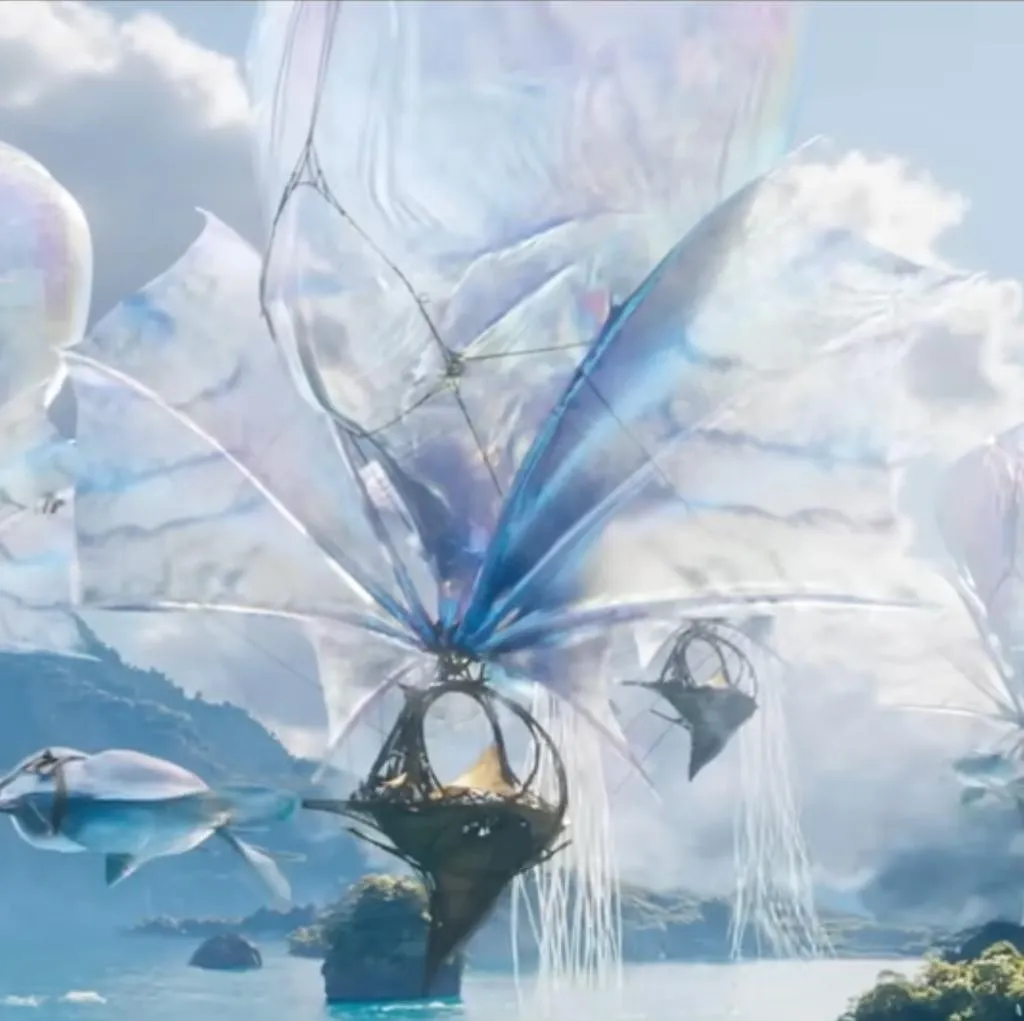 A scene from the trailer. The visual beauty of the airship piercing through layers of clouds is almost a work of art in itself.
The technical achievements are anchored by profound narrative shifts for the core characters, highlighting a new era of biological and emotional connectivity.
Narrative Analysis: Human and Na’vi Convergence (Spoilers)
Spider: A ‘Real’ Connection Beyond Human Limits
The most shocking yet philosophical setup was Spider’s biological transformation. Witnessing the mycelium, connected to Eywa through Kiri’s ability, penetrate Spider’s body and trigger cellular-level changes was nothing short of miraculous.
As a result, Spider, breathing Pandora’s air without a mask and possessing his own neural queue (kuru), shows that humans can become true members of the planet without the medium of an ‘Avatar.’ This was a key point that raises anticipation for how the boundary between humans and Na’vi will blur in the future.
Kiri: Witnessing the Visage of Eywa
Kiri once again radiates her mysterious charm as the being closest to Eywa. The scene where she approaches Eywa’s true form and invokes that massive natural power is truly electrifying. Her ability to shake all of Pandora suggests that she is moving beyond simple communion toward becoming a ruler of nature.
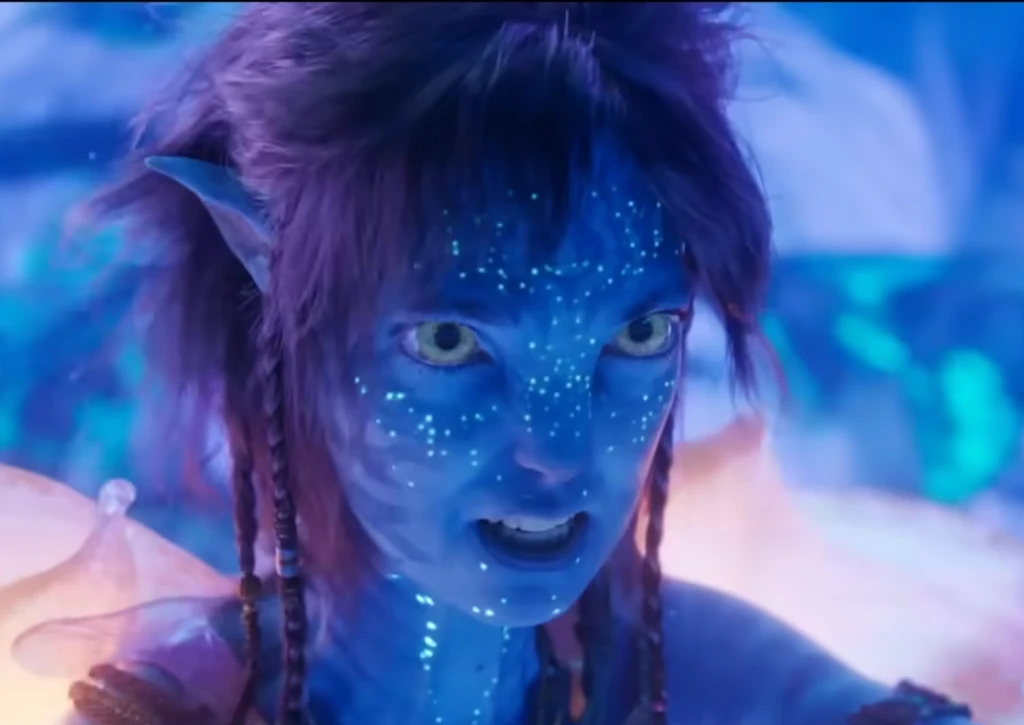 Kiri’s intense gaze in the trailer. Her vision, which seems to pierce through the laws of nature, is a vital key that permeates the entire film. (Source: Trailer excerpt)
Varang: The Twisted Revenge of a Wounded Leader
The villain Varang is not a simple, one-dimensional antagonist. Behind her hatred for Eywa lies a deep-seated resentment toward a god who remained silent while she lost loved ones in a volcanic eruption. The pain she must have endured as a leader and her consequently twisted beliefs fashioned her into the most threatening yet pitiable villain in the series.
Criticisms: A Grand Beginning Met with a Hasty Conclusion
Despite the grand scale, there were a few points of disappointment.
- Varang’s Anticlimactic Exit: Compared to the overwhelming charisma built up over three hours, her rapid defeat in the finale felt somewhat deflating.
- Lack of Anguish for Jake: The heavy conflict of Jake considering Spider an RDA threat and contemplating his termination felt resolved too easily within the plot’s flow.
- Drawn-out Middle Sections: The parts showcasing the culture of ‘The Ash People’ felt excessively long, making the 3-hour-10-minute runtime feel somewhat burdensome at times.
Summary: A Giant Leap for the Pandora Odyssey
Despite some narrative gaps, Avatar: Fire and Ash is a masterpiece that must be experienced on a big screen. This is because it goes beyond visual pleasure to begin questioning the essence of existence and the internal conflicts within the Na’vi.
Director Cameron has succeeded in expanding Pandora’s worldbuilding even wider, deeper, and darker. The moment you leave the theater, you will already find yourself missing the skies of Pandora where the next story will unfold.
Personal Rating: ★★★★☆ (4.5/5)
References
Next Steps
- Avatar Series Timeline Guide (Coming Soon)
- Avatar Series Recap Guide (Coming Soon)