TL;DR
- A winter OE error almost always means ice inside the drain pipe or pump.
- Can’t thaw it right away? Open the manual drain hose at the bottom of the washer and force the water out yourself.
- Once the water’s out, the sensor thinks draining is done — run Rinse + Spin to finish the cycle.
Table of contents
The Day the Washer Froze
We had a brutal cold snap — temps dropped below -10°C. I came home, had dinner, and found the washer just… stopped. The screen showed OE (Outlet Error). First thing I did was look up what that even meant.
“Did the drain pipe freeze?”
Usually an OE error means a clogged filter or a kinked hose. But in weather that cold, it’s almost always ice blocking the drain pipe or pump.
The problem: the drain pipe in my place is tucked in deep, so a hair dryer or hot water wasn’t going to reach it easily. Meanwhile my laundry was sitting in a drum full of water, and thawing the pipe wasn’t happening anytime soon. So I went with the “manual drain and escape” method instead.
Can’t Melt It? Drain It Yourself
The reason the washer throws an OE error is simple: “I told the water to leave, and the water level isn’t dropping.”
The drain motor can spin all it wants — ice is blocking the path either way. But if you drain the water by hand, the machine can move on to the next step (rinse/spin).
Step 1: Find the Manual Drain Hose
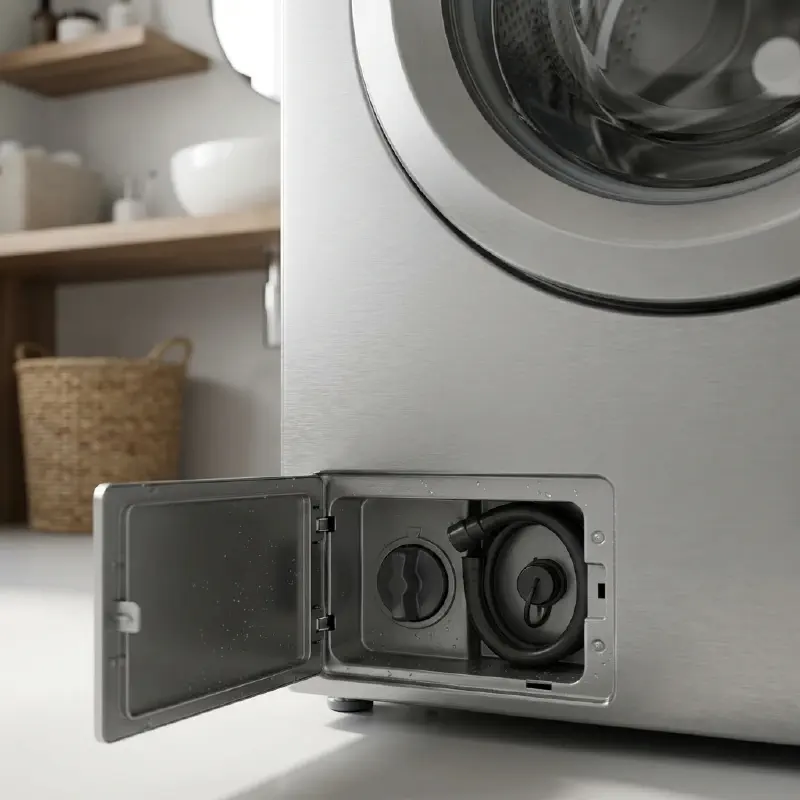
Open the small square service cover at the bottom front of the washer (usually left or right corner). Inside, you’ll find the drain pump filter and a small black manual drain hose.
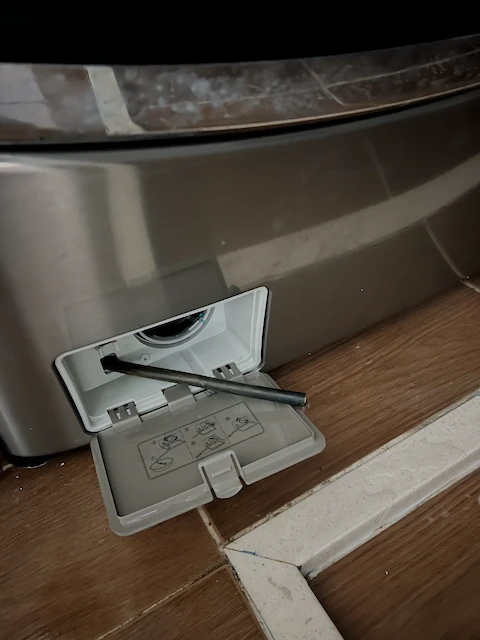 Opening the service cover at the bottom of the machine
Step 2: Manually Drain the Water (Rinse and Repeat, Literally)
The drum is currently full of rinse water. A small cup isn’t going to cut it.
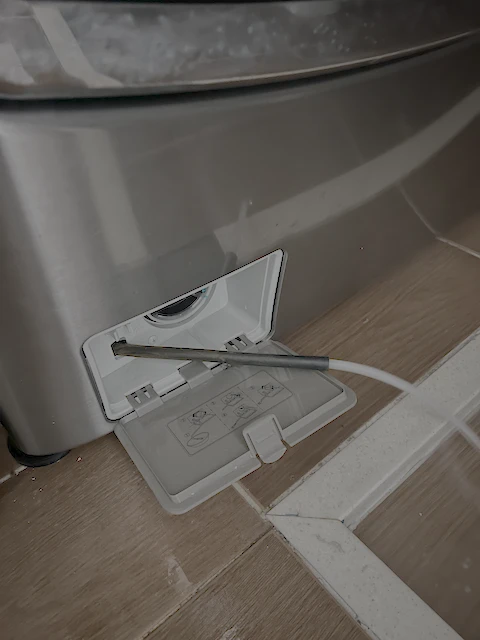 Pulling the cap and catching water in a basin
- Put a wide basin or tray under the hose.
- Pull the drain hose cap out.
- Water comes gushing out.
- Once the basin’s full, cap it fast, dump the water, and repeat.
[!NOTE] From experience: there’s way more water than you’d expect. I emptied a big basin about 3-4 times. I did this whole thing alone, and while I kept dumping and refilling the basin, my wife was stuck not being able to do laundry, which she wasn’t thrilled about. My arm was sore, but I just kept at it to save the laundry.
Step 3: Finish with Rinse + Spin
Once no more water comes out, cap the hose tight, push it back into place, and close the cover.
Turn the washer back on and pick ‘Rinse + Spin’ (or just Spin). Since the machine thinks draining already finished, it skips the broken drain step and goes straight to spinning your clothes dry.
Sometimes You Have to Be the Drain Pump
The real fix is thawing the frozen pipe or pump. But if you need to leave for work, or you’re not up for wrestling a hair dryer on a freezing balcony at midnight, this is the best emergency option.
- Drain the water by hand.
- Spin the clothes and get them into the dryer.
- Worry about thawing the pipe after the laundry’s safe.
If you get hit with a sudden OE error in winter and can’t thaw the pipe right away, don’t panic — just go find the manual drain hose. Draining the water yourself is enough to get the washer moving again. For what it’s worth, my pipe thawed on its own a few days later, and drainage’s been back to normal since.